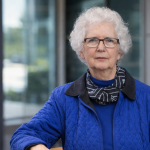
The name Caroline Crowther appears frequently in academic journals, clinical guidelines, and global discussions about maternal and newborn health. Yet outside medical and research circles, her story is less widely told. She is not a celebrity scientist or a public-facing media figure. Instead, she represents a quieter but deeply influential kind of leadership: the clinician-scientist whose work steadily reshapes how pregnancy complications are understood and treated across the world.
Caroline Crowther’s career sits at the intersection of medicine, research, and public health. Her work has influenced how doctors manage preterm birth, gestational diabetes, and other high-risk pregnancy conditions. Over decades, she has helped move maternity care away from opinion-driven practice toward evidence that is tested, reviewed, and applied consistently. This biography explores her professional journey, her most significant contributions, and why her work continues to matter for families, clinicians, and health systems.
Early Career and Medical Foundations
Caroline Crowther trained as a medical doctor before specializing in obstetrics and maternal–fetal medicine. From the beginning, her clinical work exposed her to the fragile balance of pregnancy care. Obstetrics is a field where outcomes can change rapidly, and where decisions affect both mother and child simultaneously. These realities shaped her early interest in research.
Rather than accepting established practices at face value, Crowther became increasingly focused on the question of evidence. Why were certain treatments used routinely? What proof existed that they truly improved outcomes? And, just as importantly, what unintended harms might they cause? These questions guided her transition from purely clinical work into large-scale research.
Her academic path led to senior roles in Australia and New Zealand, including leadership positions associated with the University of Auckland and the University of Adelaide. These institutions provided the platform for her to combine patient care with rigorous investigation, a balance that would define her career.
Developing a Research Philosophy in Maternity Care
Maternity research presents unique challenges. Ethical constraints are stricter than in many other medical fields, and the tolerance for risk is understandably low. At the same time, pregnancy complications remain a major cause of death and disability worldwide. Crowther recognized that avoiding research because it is difficult can itself cause harm, as untested practices may persist for decades.
Her research philosophy emphasized large, well-designed clinical trials that reflect real-world care. She focused on questions that clinicians actually face in delivery rooms and antenatal clinics, not theoretical scenarios. This practical orientation helped ensure that her findings could be translated into everyday practice rather than remaining confined to academic debate.
Crowther also became known for her commitment to systematic reviews. Individual studies can offer clues, but maternity care demands confidence built on the totality of evidence. By contributing extensively to evidence synthesis, she helped clarify which interventions genuinely improve outcomes and which offer little benefit.
Transforming Care for Gestational Diabetes
One of Caroline Crowther’s most influential contributions relates to gestational diabetes mellitus, a condition affecting a significant proportion of pregnancies worldwide. For many years, clinicians debated how aggressively gestational diabetes should be treated. Some considered it a relatively mild condition, while others suspected it carried serious risks.
Crowther led a landmark randomized clinical trial that examined whether identifying and treating gestational diabetes improved outcomes for mothers and babies. The results demonstrated clear benefits, including reductions in serious perinatal complications. This evidence helped resolve long-standing uncertainty and shifted global practice toward more systematic screening and management.
Today, structured care pathways for gestational diabetes are standard in many health systems. Blood glucose monitoring, dietary counseling, and medical treatment when necessary are now widely accepted as essential components of prenatal care. While no single researcher can claim sole credit for this transformation, Crowther’s work played a pivotal role in establishing the evidence base that made change unavoidable.
Advancing Neuroprotection in Preterm Birth
Another defining chapter of Crowther’s career involves preterm birth, particularly births occurring very early in pregnancy. Babies born extremely preterm face a high risk of neurological injury, including cerebral palsy, which can have lifelong consequences.
Crowther was a leading investigator in trials examining the use of magnesium sulfate administered before very preterm birth. These studies showed that the treatment could reduce the risk of cerebral palsy without causing significant harm to mothers or babies. Over time, this evidence contributed to changes in clinical guidelines in multiple countries.
What makes this contribution especially notable is its practical impact. Magnesium sulfate is relatively inexpensive and widely available, meaning the benefits of this research extend beyond high-income settings. In many hospitals, its use for fetal neuroprotection has become part of routine care when very preterm delivery is imminent.
Building Research Networks and Collaborative Science
Beyond individual trials, Caroline Crowther has been instrumental in building the infrastructure that supports high-quality maternity research. She has played a central role in collaborative networks that bring together clinicians, researchers, and institutions across regions.
These networks make it possible to conduct large, multi-center trials with sufficient statistical power to detect meaningful differences in outcomes. They also promote consistency in study design and outcome reporting, which strengthens the reliability of results. Through this work, Crowther has helped shift maternity research away from isolated studies toward coordinated, collaborative science.
Her involvement with international evidence organizations, including contributions to Cochrane reviews in pregnancy and childbirth, further amplified her impact. Systematic reviews produced through these channels often inform national and international guidelines, shaping care far beyond the settings in which the original studies were conducted.
Recognition and Professional Honors
Crowther’s influence has been recognized through numerous academic and professional honors. She was elected a Fellow of the Royal Society of New Zealand, reflecting her standing as one of the region’s leading health researchers. Such recognition is reserved for individuals whose work has made a substantial and sustained contribution to knowledge.
In 2025, she received the Gluckman Medal from the University of Auckland, the institution’s highest award for research excellence. The citation emphasized not only her publication record but also the real-world impact of her work on clinical practice and policy. This recognition underscored a defining feature of her career: research that improves lives rather than merely advancing academic metrics.
Mentorship and Influence on the Next Generation
A less visible but equally important part of Caroline Crowther’s legacy lies in mentorship. Over her career, she has supervised and supported numerous postgraduate students, early-career researchers, and clinician-scientists. Many of these individuals now hold leadership roles in obstetrics, neonatology, and public health.
Her mentoring style reflects the same values evident in her research. She encourages critical thinking, ethical rigor, and a focus on meaningful outcomes. Rather than pushing students toward fashionable topics, she emphasizes questions that matter to patients and health systems. This approach helps ensure that the impact of her work extends through the people she has trained.
Global Context and Ongoing Relevance
Despite decades of progress, maternal and newborn health remains a global challenge. Preterm birth, hypertensive disorders of pregnancy, and diabetes continue to affect millions of families each year. In many regions, access to high-quality care is uneven, and preventable deaths still occur at unacceptable rates.
Crowther’s work remains highly relevant in this context. Her focus on interventions that are evidence-based, scalable, and cost-effective aligns closely with global health priorities. The treatments and care pathways she helped validate are not dependent on cutting-edge technology alone; they rely on sound clinical judgment supported by robust data.
As health systems face increasing pressure from aging populations, workforce shortages, and constrained budgets, the importance of knowing what truly works becomes even greater. Crowther’s career offers a model for how research can guide smarter, more equitable care.
Personal Approach and Professional Values
Colleagues often describe Caroline Crowther as methodical, thoughtful, and deeply committed to patient-centered research. She is known for her insistence on methodological quality and her willingness to challenge assumptions, even when doing so is uncomfortable.
At the same time, her work reflects a strong sense of empathy. Research questions are never abstract; they are rooted in real clinical dilemmas faced by women and families. This balance between rigor and compassion helps explain why her findings have been embraced by clinicians rather than resisted.
Conclusion
Caroline Crowther’s biography is not a story of sudden discovery or dramatic breakthroughs. It is a story of persistence, collaboration, and careful science applied to some of medicine’s most sensitive and consequential decisions. Through clinical trials, systematic reviews, and research networks, she has helped transform maternity care from tradition-based practice into evidence-driven medicine.
Her influence can be seen in delivery rooms where magnesium sulfate is used to protect fragile brains, in antenatal clinics where gestational diabetes is managed proactively, and in guidelines that reflect decades of accumulated knowledge. As maternal and newborn health continues to evolve, the principles that define Crowther’s career remain essential: ask the right questions, test them rigorously, and ensure that evidence reaches the people who need it most.
In that sense, Caroline Crowther’s work is not only a record of past achievement but a blueprint for the future of compassionate, effective maternity care.