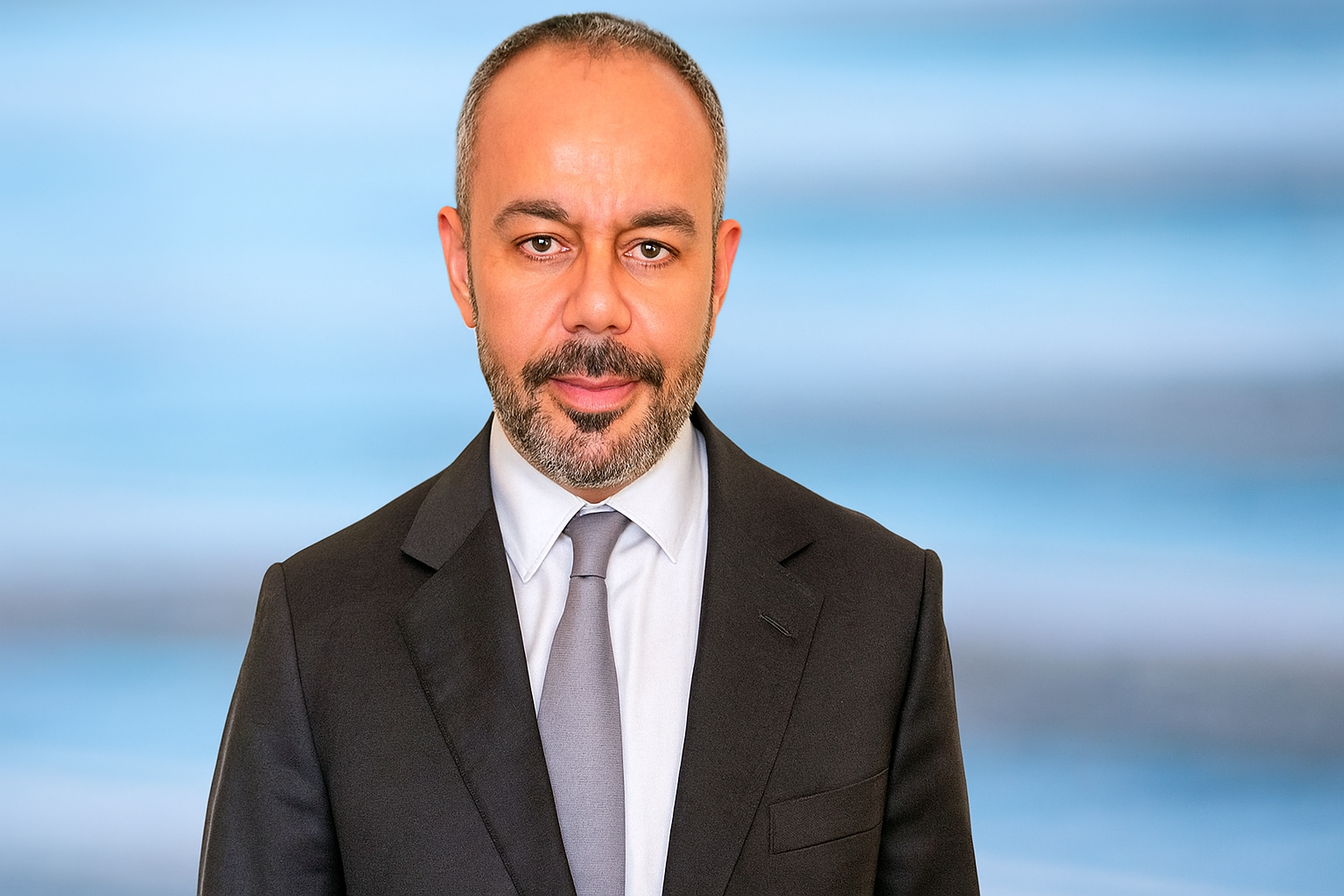
If you type “David Martínez businessman” into Google, you’ll find dozens of fragmented articles—some calling him a “ghost investor,” others labeling him a “vulture fund manager.” Yet few capture the complexity of this Mexican financier who built an empire in the shadows of distressed debt.
For nearly four decades, David Martínez Guzmán has influenced financial restructurings from Buenos Aires to Madrid, shaping deals that rescued companies, restructured sovereigns, and reshaped Latin America’s corporate landscape. Despite commanding multi-billion-dollar assets through his firm Fintech Advisory, Martínez has mastered the art of operating in near-silence.
In 2025, Martínez is once again making headlines—this time for his public support of BBVA’s bid to acquire Banco Sabadell, a rare moment when the famously private investor broke his silence.
Early Life and Education
Born in 1957 in Monterrey, Nuevo León, Mexico, David Martínez grew up in a region known for producing industrial powerhouses such as Cemex, ALFA, and Vitro. Monterrey’s culture of entrepreneurship and risk-taking left an early mark on him.
Multiple credible sources—including El País and Bloomberg—report that Martínez earned a degree in electrical engineering from the Tecnológico de Monterrey (ITESM). He later pursued philosophy studies in Rome, followed by an MBA from Harvard Business School. This unusual mix of technical, philosophical, and financial training shaped his analytical yet introspective approach to business.
After graduating, he joined Citigroup in New York, where he specialized in emerging-market debt. The experience exposed him to the chaotic but lucrative world of sovereign bonds—particularly in Latin America during the 1980s debt crises.
By the late 1980s, Martínez was ready to strike out on his own.
Founding of Fintech Advisory
In 1987, David Martínez founded Fintech Advisory Ltd., headquartered in New York City (later expanding to London). From the start, Fintech differentiated itself from traditional hedge funds. Rather than betting on quick price movements, Martínez focused on long-term distressed investing—buying the debt of bankrupt or financially distressed governments and companies, then helping steer restructurings toward profitability.
His strategy was simple but daring:
“When everyone is running from fire, walk toward it—with a plan.”
Fintech built a reputation for patience, discretion, and deep legal expertise. Martínez understood that in emerging markets, law, politics, and finance intertwine. The firm’s analysts and lawyers often spent years untangling court rulings, debt covenants, and government regulations before realizing value.
By the mid-1990s, Fintech was active across Latin America—in Argentina, Mexico, Brazil, and Venezuela—earning Martínez a reputation as the region’s most influential (and most secretive) distressed-debt investor.
Fintech Advisory’s Investment Philosophy
Unlike traditional hedge funds that chase quarterly returns, Fintech Advisory takes a “multi-year deep value” approach. Its philosophy can be summarized in four principles:
-
Buy when others panic.
Martínez looks for markets where political or economic crises have scared away most investors. He enters quietly, buying debt at deep discounts. -
Engage in restructuring, not speculation.
Fintech often becomes part of creditor committees or negotiates directly with governments and companies to restructure their balance sheets. -
Operate discreetly.
Fintech keeps media exposure to a minimum. The firm rarely issues press releases and has no flashy public website. -
Hold until structural change occurs.
Martínez is patient. Deals can take five to ten years before yielding results.
This disciplined approach has made Fintech a significant player in Latin American finance—and one of the few foreign funds respected, if grudgingly, by local governments.
Landmark Deals and Business Moves
Over nearly four decades, Martínez has executed or influenced dozens of major deals. Below are his most notable investments.
Telecom Argentina and Cablevisión Merger
Perhaps Martínez’s most complex and public series of deals unfolded in Argentina’s telecommunications sector.
-
2013: Fintech agreed to buy Telecom Italia’s stake in Telecom Argentina for approximately $960 million.
-
2015–2018: Regulatory hurdles delayed the transaction, but Fintech persisted.
-
2018: Telecom Argentina merged with Cablevisión, creating one of South America’s largest telecommunications companies.
Fintech’s long game paid off. The merged entity benefited from the convergence of mobile, broadband, and television services, positioning it to compete with global tech players entering the Latin market.
Bloomberg and Reuters called the transaction a “masterclass in regulatory persistence.”
Vitro: The Glass Giant Restructuring
In 2009, Fintech became a key player in the restructuring of Vitro, Mexico’s largest glass manufacturer. Vitro had defaulted on over $1.5 billion in bonds, sparking lawsuits from U.S. hedge funds.
Martínez’s Fintech quietly accumulated positions in Vitro’s debt and used its influence to broker a settlement that allowed the company to survive.
By 2013, Vitro emerged stronger, having preserved thousands of jobs and a 100-year-old industrial legacy.
This case exemplified Martínez’s ability to blend financial engineering with corporate diplomacy.
Grupo Aeroportuario del Centro Norte (OMA) Sale to Vinci
For years, Fintech held a 29.9% stake in OMA, a major Mexican airport operator managing 13 airports, including Monterrey International.
In 2022, Martínez sold this stake to Vinci Airports (France) for $815 million USD—a highly profitable exit that gave Vinci its first major foothold in Mexico’s infrastructure sector.
This was a textbook Fintech move: hold a valuable regulated asset for years, then exit when a strategic global buyer offers full price.
Banco Sabadell: The European Chapter
In 2013, Martínez made a bold move into European banking by buying a 5% stake in Banco Sabadell, one of Spain’s oldest and most respected banks.
He joined Sabadell’s board of directors in 2014, marking his entry into European corporate governance.
Fast forward to 2025, and Martínez finds himself once again in the headlines. When BBVA launched a hostile takeover bid for Sabadell, Martínez publicly supported BBVA’s offer, citing efficiency, digital transformation, and global competitiveness as the rationale.
His op-ed in El País shocked observers—it was one of the very few public statements he’s ever made. Analysts saw it as a sign of Fintech’s confidence in cross-border consolidation.
Grupo Televisa: Media Bets in the Streaming Era
In 2024, reports surfaced that Fintech had increased its stake in Grupo Televisa to around 7.8%, making it one of the largest shareholders.
Martínez’s interest in Televisa, Latin America’s largest media company, aligns with his historical bet on convergence—the integration of telecommunications, media, and technology.
While Televisa has faced challenges from Netflix and YouTube, Fintech’s investment is seen as a long-term turnaround play, betting on local content, sports broadcasting, and digital advertising.
David Martínez’s Personal Philosophy: Silence as Strategy
Unlike most billionaires who court publicity, Martínez embraces strategic invisibility.
He rarely gives interviews, avoids conferences, and doesn’t appear on social media. His firm, Fintech Advisory, maintains no public website, no Twitter account, and no official press contact.
Why such secrecy?
Because discretion is a competitive advantage. In politically volatile markets, publicity can attract unwanted attention—from regulators, competitors, or activists.
As one former associate told Reuters:
“David learned early that in Latin America, silence buys you time—and time buys you value.”
This approach has earned him nicknames like “the ghost investor” and “the silent billionaire.” Yet, among corporate insiders and bankers, Martínez commands immense respect.
The Art Collector: Martínez’s Other World
Beyond finance, David Martínez is known as an avid art collector.
In the mid-2000s, he was reportedly the buyer of Jackson Pollock’s No. 5, 1948, one of the world’s most expensive paintings at the time, allegedly purchased for $140 million USD.
He also appears regularly on the ARTnews Top 200 Collectors list, though details of his collection remain private.
His holdings are said to include pieces by Mark Rothko, Willem de Kooning, and Gerhard Richter.
[Disclaimer: These details are partially unverified; Martínez never publicly comments on his art holdings.]
Art and finance may seem worlds apart, but for Martínez, both involve understanding value where others see chaos.
Criticisms and Controversies
No powerful investor escapes criticism, and Martínez is no exception.
-
Vulture Fund Accusations
Some governments and labor groups have labeled Fintech a “vulture fund,” accusing it of profiting from crisis. However, Martínez argues that distressed investing, when done ethically, restores solvency and protects jobs by restructuring—not liquidating—companies. -
Regulatory Disputes in Argentina
His acquisitions of Telecom Argentina and Cablevisión faced multiple regulatory roadblocks from the Kirchner and Fernández administrations, which feared foreign control of national assets. -
Opacity
Critics claim that Martínez’s secrecy makes it hard to assess his influence or holdings. Yet, others see this as a sign of professionalism rather than concealment.
Despite controversies, Martínez has never been involved in legal scandals or corruption cases—a remarkable feat given the complexity of his deals.
Influence in the Global Financial Landscape
David Martínez belongs to a rare breed of investors who straddle sovereign and corporate restructuring.
His approach combines Wall Street discipline with Latin American realism, earning him seats in boardrooms from Buenos Aires to Barcelona.
Today, Fintech Advisory manages multi-billion-dollar positions across:
-
Banking and finance (Banco Sabadell, BBVA exposure)
-
Telecom and media (Televisa, Telecom Argentina)
-
Infrastructure (OMA airports)
-
Industrial manufacturing (Vitro, ALFA ecosystem companies)
His influence extends to policy, too. Fintech has often played an informal role in stabilizing debt markets during crises—especially in Argentina’s sovereign restructurings of the 2000s and 2010s.
In short, Martínez operates where capital meets diplomacy.
Lessons Entrepreneurs Can Learn from David Martínez
Patience Creates Profits
Fintech’s success shows that long-term conviction beats short-term speculation. Distressed investing is a waiting game.
Understand Before You Act
Martínez’s team studies legal frameworks, political cycles, and corporate culture before making a move. Entrepreneurs should adopt the same 360° understanding before taking risks.
Stay Low to Go High
In an age of personal branding and influencer CEOs, Martínez proves that silence can be power. Focus on execution, not attention.
Ethics Matter in Distress
Fintech’s restructurings—like Vitro’s—demonstrate that distressed investors can rebuild, not just exploit. Business ethics are integral to long-term reputation.
Frequently Asked Questions (FAQ)
Who is David Martínez, businessman?
He is a Mexican financier, founder of Fintech Advisory, and one of the world’s most successful distressed-debt investors.
What is Fintech Advisory?
A private investment firm specializing in distressed debt, corporate restructuring, and sovereign bonds, operating mainly in Latin America and Europe.
How did he make his fortune?
By buying distressed assets—companies or debt—during crises, restructuring them, and exiting profitably after recovery.
Is David Martínez a billionaire?
Yes, though his exact net worth is undisclosed. Estimates place him in the multi-billion-dollar range based on his holdings.
Why is he called “the ghost investor”?
Because he avoids publicity, rarely grants interviews, and prefers to operate behind the scenes.
What’s new in 2025?
Martínez publicly supported BBVA’s takeover offer for Banco Sabadell, marking a rare public stance in his otherwise private career.
The 2025 Perspective: Martínez’s Next Chapter
As of 2025, the financial world is watching David Martínez’s evolving role in Europe and Latin America.
With the BBVA–Sabadell merger potentially reshaping Spanish banking and Televisa’s transformation into a digital content powerhouse, Martínez stands at the intersection of finance, media, and technology.
Analysts expect Fintech Advisory to expand its European presence, possibly into distressed green energy and infrastructure investments, as post-pandemic economies face refinancing challenges.
If history is a guide, Martínez will move quietly—but decisively.
Read Also: Alex Partakis: Biography, Career, Family & Property Success
Conclusion: The Legacy of David Martínez
David Martínez embodies a paradox: a billionaire without a public persona, a power broker who avoids cameras, and a financier who values silence over spectacle.
His story isn’t about flashy IPOs or Silicon Valley hype—it’s about discipline, strategy, and trust built over decades.
From Monterrey to Manhattan, Martínez has proven that real influence doesn’t require noise.
He’s not just a businessman; he’s a strategist, philosopher, and investor who redefined what it means to thrive in uncertainty.
For anyone building a global business—or navigating financial storms—David Martínez’s playbook remains one of the most instructive in modern capitalism.


