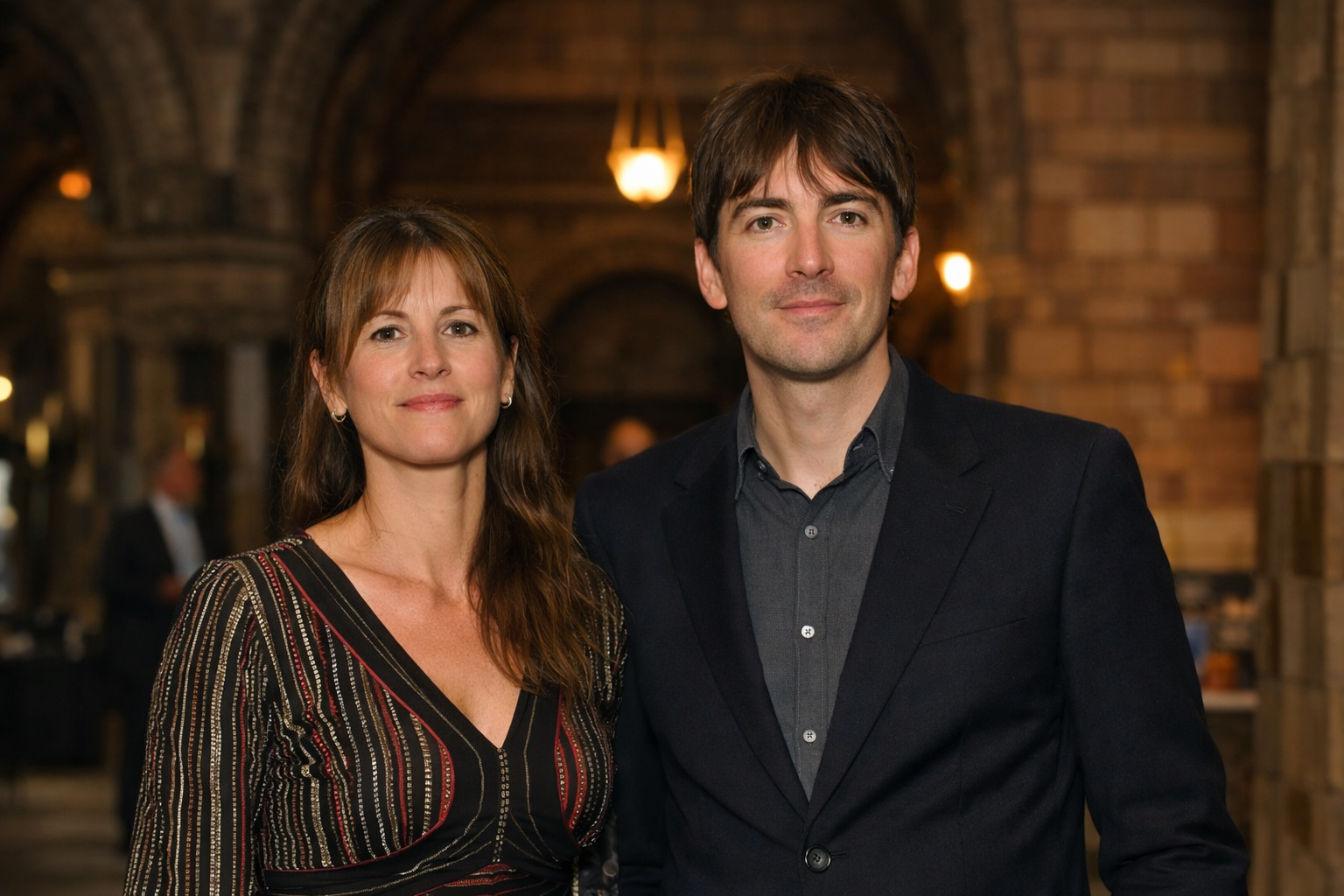
The name Anya Reeve tends to surface quietly. It appears in programme credits, exhibition listings, institutional biographies, and occasionally in media references connected to British television. Unlike public figures defined by a single, loud identity, Anya Reeve’s profile is built through professional contribution rather than personal branding. That subtlety has led to confusion online, but it also reveals something important about how modern cultural work actually functions.
This biography-style account focuses on what can be responsibly established: her education, professional trajectory, and the distinct public contexts in which her name appears. Rather than speculating or blending identities, the aim here is clarity—grounded in verifiable work and credible records.
Early Life and Academic Formation
Anya Reeve’s academic background places her firmly within the humanities tradition that continues to shape the UK’s cultural institutions. She studied English Language and Literature at undergraduate level before completing an MSt in Literature 1900–Present at the University of Oxford. That postgraduate focus is significant. Literature from the twentieth century onward requires fluency in modernism, postmodernism, and contemporary cultural theory, but also demands precision in close reading and historical context.
This type of training is not abstract. It prepares graduates for editorial judgement, interpretive clarity, and an ability to communicate complex ideas without diluting them. In Reeve’s case, those skills would later surface in publishing work, curatorial support, and public-facing cultural interpretation.
During and following her academic studies, she began contributing essays to established literary platforms. Her writing has appeared in The Modernist Review and The Oxonian Review, both of which are known for thoughtful criticism rather than casual commentary. These early publications situate her within a serious literary conversation, one that values analysis over visibility.
Entering the Cultural Sector: Publishing and Events Work
Following her academic period, Anya Reeve moved into professional cultural work through roles that sit at the intersection of publishing, galleries, and events. She became associated with the Swedenborg Society, a long-established UK organisation dedicated to the study, publication, and public discussion of the work of Emanuel Swedenborg and related cultural history.
At the Society, she worked as a publishing, gallery, and events assistant. While the title may sound broad, it reflects the reality of contemporary cultural institutions, where roles are intentionally hybrid. Publishing assistants often manage editorial workflows, liaise with authors and editors, and oversee production details. Gallery and events responsibilities add another layer: exhibitions, talks, festivals, and public engagement.
This combination of tasks demands a rare balance. It requires organisational precision, editorial sensitivity, and interpersonal skill. Crucially, it also places the individual at the point where scholarship meets the public. For someone with a literature background, it is a natural evolution—translating ideas from page to space, from text to experience.
Festival and Exhibition Involvement
Anya Reeve’s role expanded further through her involvement in the Swedenborg Film Festival. Listed as a festival assistant, she contributed to the organisational and operational side of a programme that brings film, literature, and philosophy into conversation. Film festivals, particularly those attached to cultural institutions rather than commercial circuits, rely heavily on behind-the-scenes expertise. Scheduling, guest coordination, programme coherence, and audience experience all depend on assistants who understand both content and logistics.
Her work did not remain confined to administration. She later appeared in a public-facing role as an assistant curator for an exhibition at Swedenborg House, where she also led guided tours. This transition matters. Curatorial assistance involves research, object selection, interpretive framing, and narrative flow. Leading tours adds another dimension: the ability to speak clearly, adapt to audiences, and convey meaning without oversimplification.
In these settings, Reeve’s literary training becomes visible in practice. Visitors are not just shown objects or texts; they are guided through ideas, contexts, and questions. This is cultural mediation at its most effective—quiet, informed, and respectful of audience intelligence.
Writing Beyond Institutions
Alongside her institutional roles, Anya Reeve has continued to pursue creative and critical writing. Her published essays demonstrate a sustained engagement with literary culture, while later prose pieces signal a willingness to explore creative expression more directly.
This dual commitment—to institutional work and independent writing—is increasingly common among cultural professionals. It reflects both economic reality and intellectual curiosity. Writing sustains a personal voice, while institutional roles offer collaborative structure and reach. Together, they form a career model that is adaptive rather than linear.
Importantly, this approach resists the pressure to turn every cultural worker into a personal brand. Reeve’s profile remains anchored in contribution, not self-promotion.
A Separate Public Context: Family Life and Television Connections
The name Anya Reeve also appears in a different public context—one connected to British television presenter and author Simon Reeve. In this context, Anya Reeve is referenced as his wife and is sometimes identified by her maiden name, Anya Courts.
Public records and official documentation confirm that an Anya Courts stood as a Green Party candidate in the Belsize ward of Camden during the 2010 local elections. This establishes a real, traceable civic engagement under that name. Media profiles and interviews with Simon Reeve also reference his wife Anya in personal contexts, such as family life and home projects.
Additionally, she has been described in some sources as a television camera operator. That profession aligns with the broader UK screen industry, where many skilled practitioners operate behind the camera rather than in front of it. Camera operators rarely become household names, yet they are essential to the production of factual television and documentaries—the very genre that Simon Reeve is known for.
What matters here is distinction. While the name overlaps, responsible biography does not merge unrelated professional narratives without evidence. The cultural-sector Anya Reeve and the Anya Reeve (née Courts) connected to television and political campaigning are best understood as separate public identities unless explicitly linked by primary sources.
Why Name Confusion Happens in the Digital Age
The confusion surrounding Anya Reeve is not unique. Search engines reward repetition, not accuracy. When a name appears across different contexts, low-quality websites often stitch together fragments to create a single, misleading biography. Over time, those fragments harden into “facts” that circulate without verification.
This problem is especially acute for women whose professional work is not celebrity-driven. Cultural workers, editors, curators, and technicians are visible enough to be searchable, but not visible enough to control their narrative online. As a result, their identities are vulnerable to algorithmic blending.
Understanding Anya Reeve’s biography therefore requires restraint. It requires attention to institutional sources, official records, and the limits of what is publicly documented.
Cultural Work in Context: Why These Roles Matter
Anya Reeve’s career trajectory reflects broader trends in the UK’s creative economy. Cultural institutions increasingly rely on highly educated professionals who can move between research, production, and public engagement. These roles are demanding, often under-credited, and essential.
Publishing assistants ensure intellectual rigour. Events assistants make scholarship accessible. Assistant curators shape how history and ideas are encountered by non-specialist audiences. Camera operators translate reality into visual narrative. None of these roles dominate headlines, yet all of them shape public understanding.
Reeve’s work exemplifies this ecosystem. Her contributions sit within systems larger than herself, which is precisely why they matter.
A Professional Identity Defined by Contribution
What emerges from examining Anya Reeve’s biography is not a single defining moment, but a pattern. Education grounded in literature. Work rooted in cultural institutions. Writing that engages rather than performs. Public roles that prioritise clarity over visibility.
In an era where personal branding often overshadows substance, this kind of career can seem invisible. Yet it is also durable. Cultural institutions depend on people like Reeve—individuals who can hold complexity, manage detail, and communicate with care.
Her biography reminds us that influence does not always announce itself. Sometimes it is found in the smooth running of an event, the coherence of an exhibition, or the quiet confidence of a guided tour.
Conclusion
Anya Reeve’s story is best understood not as a viral biography, but as a professional life shaped by education, cultural commitment, and behind-the-scenes expertise. Whether through publishing and curatorial work in the UK arts sector, or through a separate public identity connected to television and civic engagement, the name represents contribution rather than spectacle.
The confusion surrounding her online presence says more about how digital systems handle identity than it does about her work. When approached carefully, her biography offers a clearer lesson: meaningful cultural labour often happens away from the spotlight, yet its impact is lasting.
In tracing Anya Reeve’s path, we are reminded that culture is sustained not only by famous names, but by those who quietly make ideas accessible, institutions functional, and public engagement possible.


