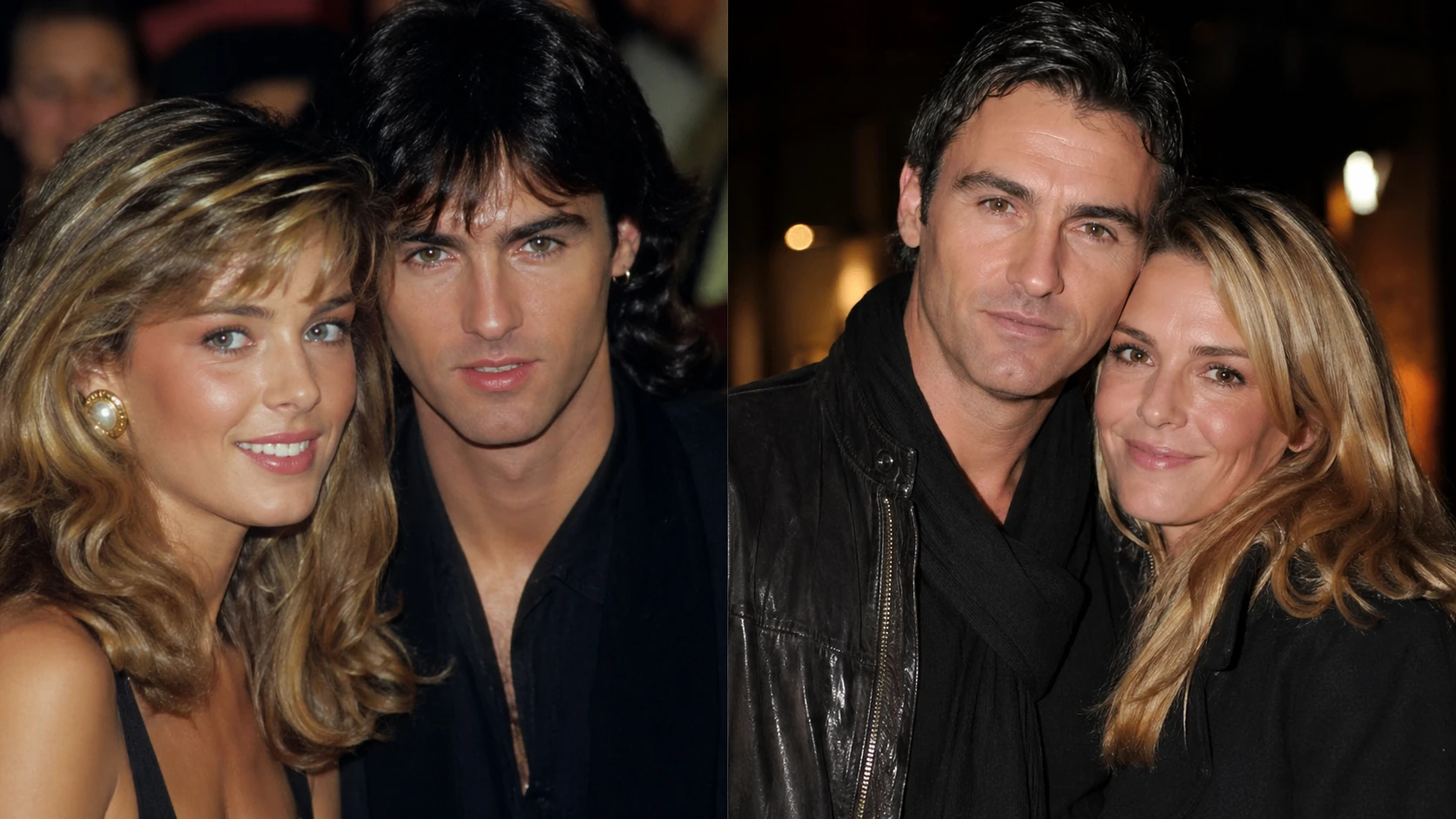
Eileen Catterson became publicly known at an age when most people are still figuring out who they want to be. In 1987, she won Miss Scotland as a teenager, stepping into a world of pageant stages, press attention, modeling opportunities, and sudden public scrutiny. Her name later became familiar to many music fans because of her long relationship with Marti Pellow, the Scottish singer best known as the frontman of Wet Wet Wet.
Yet Eileen Catterson’s story is not a typical celebrity biography. She has never built a career around constant interviews, personal branding, or public confession. Much of what is known about her comes from pageant records, press archives, and the public life of the man she has been linked to for decades. That makes her a figure who is both recognizable and private, present in the public record but rarely speaking from its center.
Early Life and Scottish Roots
Eileen Ann Catterson is Scottish and was associated in early coverage with Erskine, a town in Renfrewshire near the River Clyde. Public records and press references place her young adulthood in the west of Scotland, where she entered the beauty and modeling circuit as a teenager. Her full family background, schooling, and private upbringing have not been widely documented in reliable public sources. That absence matters, because it shows how little she has chosen to make public beyond the years when her career first brought attention.
What can be said with confidence is that Catterson entered public life young. She was reported to be 17 during the events surrounding Miss Universe 1987, which places her birth around 1969 or 1970. Like many young women in the pageant system of that period, she appears to have combined modeling, dance, and public appearances. Those activities could open doors, but they also exposed contestants to a level of judgment that now looks especially harsh.
The Scotland of Catterson’s youth had a lively entertainment culture, with local discos, fashion events, pageants, newspapers, and television all feeding into public life. Beauty contests were still treated as mainstream entertainment, and winners often became local celebrities overnight. For a teenager from the west of Scotland, winning a national title meant much more than a sash and photographs. It meant being judged, praised, questioned, and sometimes criticized before a much wider audience than she could have expected.
Winning Miss Scotland in 1987
Catterson’s defining early achievement came in April 1987, when she won Miss Scotland. The contest placed her among the country’s most visible young women and made her Scotland’s expected representative in the wider international pageant world. For readers trying to understand why her name still appears in searches decades later, that title is the starting point. It gave her a public identity before any later association with pop fame.
Miss Scotland in the 1980s carried a different public meaning from the way pageants are often viewed now. Winners were treated as entertainment figures, promotional guests, and national representatives, even when they were still very young. The title could lead to modeling work, travel, newspaper attention, and international pageant invitations. It also brought a level of inspection that could be unforgiving.
Catterson’s win should not be reduced to a footnote in someone else’s story. Before she became widely known as Marti Pellow’s long-term partner, she had already earned a place in Scottish pageant history. Her title was a clear, documented milestone, and it remains the most important public achievement attached to her own name. It explains both her early visibility and the continued curiosity around her.
The Miss Universe Disqualification
The most widely reported episode from Catterson’s pageant career came shortly after her Miss Scotland win. She was expected to be connected to the Miss Universe 1987 contest in Singapore, but she did not compete because she was under the required age. Contemporary reports described her as 17 and said she was disqualified after organizers found she did not meet the age rules. The incident turned what should have been a glamorous international opportunity into an uncomfortable public controversy.
This is one of the details most often misstated in short online profiles. Catterson is sometimes described as a Miss Universe contestant, but the more accurate account is that she was Miss Scotland 1987 and was barred from the Miss Universe contest before competing. That difference matters because it changes the story from a competition record to an eligibility issue. It also makes clear that the problem lay in the rules and process around her entry, not in any failure by Catterson on stage.
For a 17-year-old, the episode must have been difficult. She had won a national title and then found herself at the center of international pageant coverage for reasons beyond her control. Public accounts from the time describe the situation as embarrassing and unfortunate, and later references still treat it as a defining incident in her early life. It remains a reminder of how quickly pageant success could become public pressure.
Modeling, Dance, and Public Appearances
After Miss Scotland, Catterson was described in press coverage as a model and dancer. Those labels suggest a career built around image, movement, performance, and public presentation rather than a single fixed profession. She was photographed and covered as part of the wider Scottish and British entertainment scene, especially during the years when pop culture and fashion press often overlapped. Her career, though, was not documented with the same detail as that of a recording artist or actor.
That creates a challenge for any serious biography. Some online accounts describe her modeling career in grand terms, but many do not provide enough evidence to support those claims. It is safer and more accurate to say that she worked as a model and was known in Scottish celebrity and fashion circles. There is public support for that description without turning it into a larger career story than the evidence proves.
Her public profile also reflects the limits of pre-internet fame. A model or pageant winner in the 1980s and 1990s might appear in newspapers, agency shoots, event photographs, and entertainment columns without leaving behind an easily searchable record. Careers like that were often visible in the moment but poorly preserved online. Catterson’s public record has that quality: clear in flashes, incomplete in detail.
Relationship with Marti Pellow
Catterson became known to a much wider public through her long relationship with Marti Pellow. Pellow rose to fame as the lead singer of Wet Wet Wet, the Scottish band behind major hits including “Love Is All Around.” At the height of the band’s success in the 1990s, Pellow was one of Britain’s most recognizable pop stars. His private life naturally drew press interest, and Catterson’s name became part of that coverage.
The couple have been described for years as long-term partners. Reliable profiles have identified Catterson as Pellow’s partner rather than making stronger claims that cannot be confirmed. Some reports have said they have been together for more than three decades, which fits the broad timeline of their public association. What is striking is that they have remained linked for so long while still keeping much of their life private.
Their relationship has often been described with curiosity because it does not follow the usual celebrity pattern. There has been no steady parade of joint interviews, reality television appearances, or public family branding. Catterson appears to have supported Pellow while avoiding the spotlight herself. That choice has helped preserve her privacy, but it has also led to confusion about marriage, children, and her current life.
Is Eileen Catterson Married?
There is no reliable public confirmation that Eileen Catterson and Marti Pellow are legally married. Many casual online pages refer to her as his wife, but stronger reporting usually calls her his long-term partner. That distinction is important because a long relationship does not automatically mean a legal marriage. Without direct confirmation from the couple or a verified public record, it is not accurate to state marriage as fact.
The confusion has likely grown because of the length of the relationship. When two people are together for decades, writers and fans often use “wife” informally, even when the legal status is unclear. Some reports have also repeated older claims that Pellow proposed more than once. Those claims may reflect past interviews, but they do not settle the current question of whether a marriage took place.
Catterson and Pellow have never appeared eager to turn that question into public material. Their decision not to clarify every personal detail is itself part of their public image. They have allowed the relationship to be acknowledged without making it a spectacle. For a biography, the responsible position is simple: she is publicly known as his long-term partner, and any claim of marriage should be treated with caution.
Children and Family Life
There is no confirmed public record showing that Eileen Catterson and Marti Pellow have children together. Some search results and celebrity snippets speculate about family life, but speculation is not a source. Reputable entertainment profiles have often stated that it is not publicly known whether the couple have children. That careful wording should be respected.
Private family matters deserve a higher standard of evidence than general career details. Catterson has not lived as a constant public figure, and children, if any, would not automatically be part of the public record. The absence of confirmed information should not be filled with guesses. In this case, the honest answer is that her family life is largely private.
That privacy has likely been intentional. Pellow has spoken publicly about career, addiction, sobriety, and music, but he has kept his domestic life guarded. Catterson has been even more reserved. Together, they have shown that a long relationship can exist beside fame without becoming a public performance.
Marti Pellow’s Addiction and Catterson’s Public Role
One of the most serious chapters in Catterson’s public story came during coverage of Marti Pellow’s addiction. Pellow later spoke openly about heroin use and recovery, and press accounts from that period placed Catterson close to him during a frightening time. Reports said she revealed his heroin use after a collapse in 1999, bringing public attention to a crisis that had been hidden from many fans. It was a rare moment when her private role intersected directly with public events.
This part of the story should be handled with care. Addiction is not entertainment, and the people around a person in crisis often carry pain that the public never sees. Catterson was not simply a name attached to a famous singer; she was reported as someone close enough to confront the reality of his condition. Later coverage has framed her as a source of support during his recovery.
Pellow has since spoken about sobriety with unusual directness. His recovery became part of his later public identity, especially as he moved beyond the band years into solo work and stage performance. Catterson’s role in that story is visible but not overexplained. The public record suggests loyalty and concern, but it does not give outsiders permission to invent private scenes.
Public Image and Media Attention
Catterson’s public image has always been shaped by a contrast. She was first seen in a world built on visibility, beauty contests, modeling, and photography. Later, she became known as the partner of a singer whose career attracted headlines across Britain. Yet her own conduct has been marked by restraint rather than attention-seeking.
That restraint may be why readers remain curious. People who are constantly visible often become less mysterious over time, while those who step back can become the subject of repeated questions. Catterson’s name appears in articles, archives, image libraries, and entertainment profiles, but she rarely speaks at length for herself. The result is a public image built from fragments.
The risk is that fragments invite exaggeration. Some short biographies make her sound like a major celebrity entrepreneur, while others reduce her to a beauty queen or a famous man’s partner. Neither version is fully fair. The more accurate picture is of a woman who had her own public achievement early, later became connected to a major pop figure, and then lived mostly outside the machinery of celebrity.
Career, Income, and Net Worth
There is no credible, verified public estimate of Eileen Catterson’s personal net worth. Some websites may publish figures, but many celebrity net worth pages rely on guesswork, copied content, or broad assumptions. Because Catterson has not maintained a public business profile, released financial records, or built a heavily documented entertainment career, any precise number would be unreliable. A responsible biography should not invent one.
Her known income sources would likely have included modeling, dance, appearances, and pageant-related work during her more public years. It is also possible she had private work or business interests outside public view, but those should not be stated as fact without evidence. Her connection to Pellow does not make his earnings hers, and it would be misleading to blend their finances. Personal wealth is one of the areas where online biographies most often overreach.
Pellow’s career, by contrast, has been public and commercially successful. Wet Wet Wet sold records, toured widely, and produced major hits, while Pellow later worked as a solo singer and stage performer. Catterson’s own financial position remains private. The most accurate answer is that her net worth is not publicly verified.
Where Eileen Catterson Is Now
Eileen Catterson appears to live a private life away from regular public attention. Recent profiles connected to Marti Pellow have still identified her as his long-term partner, but they do not present her as an active celebrity or public campaigner. That suggests she remains part of his personal life while keeping her own profile low. It is a continuation of the pattern that has defined her for many years.
She does not appear to use public visibility in the way many former pageant winners or celebrity partners do. There is no widely known official public platform, no regular interview circuit, and no steady stream of personal updates. This does not mean she has disappeared; it means she has chosen not to make her private life a public product. In a celebrity culture built on constant disclosure, that choice stands out.
For readers, this can be unsatisfying because search habits are built around complete answers. People want a current photo, a family update, a confirmed marital status, and a net worth figure. But not every life has to be available in that way. Catterson’s present status is best described with modest confidence: she is a former Miss Scotland and model, publicly known as Marti Pellow’s long-term partner, and largely private today.
Why Her Story Still Draws Interest
Catterson’s name continues to draw interest because it connects several kinds of public memory. Older readers may remember beauty contests as mainstream television and newspaper events. Music fans know Marti Pellow and Wet Wet Wet as part of the soundtrack of British pop in the 1980s and 1990s. Others stumble across her name while trying to separate fact from repeated online claims.
There is also a human reason for the curiosity. Catterson’s life touches fame without being consumed by it, which makes her different from many people attached to celebrity culture. She had a public title, public beauty, and public proximity to a famous musician, yet she did not build her identity around endless exposure. That kind of quietness can feel rare now.
Her story also reflects how women connected to famous men are often written about. They are introduced by relationship status, measured by appearance, and described through what they mean to someone else. Catterson deserves a better frame than that. She was Miss Scotland before she was widely known as Pellow’s partner, and her privacy deserves to be treated as a choice rather than a missing chapter.
Frequently Asked Questions
Who is Eileen Catterson?
Eileen Catterson is a Scottish former beauty queen, model, and dancer who won Miss Scotland in 1987. She became more widely known through her long relationship with Marti Pellow, the lead singer of Wet Wet Wet. Her public life is documented in fragments, with the clearest facts tied to her pageant title and her association with Pellow.
How old is Eileen Catterson?
Eileen Catterson was reported to be 17 during the Miss Universe 1987 eligibility controversy. That places her birth around 1969 or 1970, though a precise date of birth is not consistently confirmed in reliable public sources. Because exact age claims vary online, the most careful wording is based on the documented age reported in 1987.
Did Eileen Catterson win Miss Scotland?
Yes, Eileen Catterson won Miss Scotland in 1987. That title remains her most clearly documented personal public achievement. Her win brought her national attention and led to her expected involvement with the Miss Universe contest that same year.
Why did Eileen Catterson not compete in Miss Universe?
Eileen Catterson did not compete in Miss Universe 1987 because she was under the contest’s required age. Contemporary reports said she was 17 and was disqualified from the pageant in Singapore. She should therefore be described as Miss Scotland 1987, not as a full Miss Universe contestant.
Is Eileen Catterson Marti Pellow’s wife?
There is no reliable public confirmation that Eileen Catterson is legally married to Marti Pellow. The safest and most accurate description is that she is his long-term partner. Some websites call her his wife, but that wording should not be treated as confirmed unless supported by a direct statement or official record.
Do Eileen Catterson and Marti Pellow have children?
There is no confirmed public information showing that Eileen Catterson and Marti Pellow have children together. Their family life has been kept private, and reputable profiles tend to avoid making firm claims. Any statement about children should be treated carefully unless it comes from a reliable source.
What is Eileen Catterson’s net worth?
Eileen Catterson’s personal net worth is not publicly verified. Online estimates should be treated with skepticism because they usually do not show reliable evidence. Her known public work includes modeling, dance, pageant appearances, and media visibility, but there is no solid basis for a precise financial figure.
Conclusion
Eileen Catterson’s biography is not the story of someone who chased fame for decades. It is the story of a young Scottish woman who entered public life through beauty pageants, experienced sudden attention, and later became connected to one of the most recognizable voices in British pop. Her life has been visible enough to interest readers, but private enough to resist easy summary.
The most reliable account of her keeps the facts close. She was Miss Scotland in 1987, was barred from Miss Universe because of age rules, worked as a model and dancer, and became known as Marti Pellow’s long-term partner. Around those facts sits a much larger private life that has not been fully offered to the public. That boundary should be honored rather than filled with speculation.
What makes Catterson interesting now is not only what happened to her in the spotlight. It is also the way she stepped back from it. In a culture that often treats privacy as a puzzle to solve, her story asks for a different kind of attention. The most respectful reading is also the most accurate one: Eileen Catterson remains a notable figure in Scottish pageant and pop-culture history, but she has kept the rest of her life largely her own.


