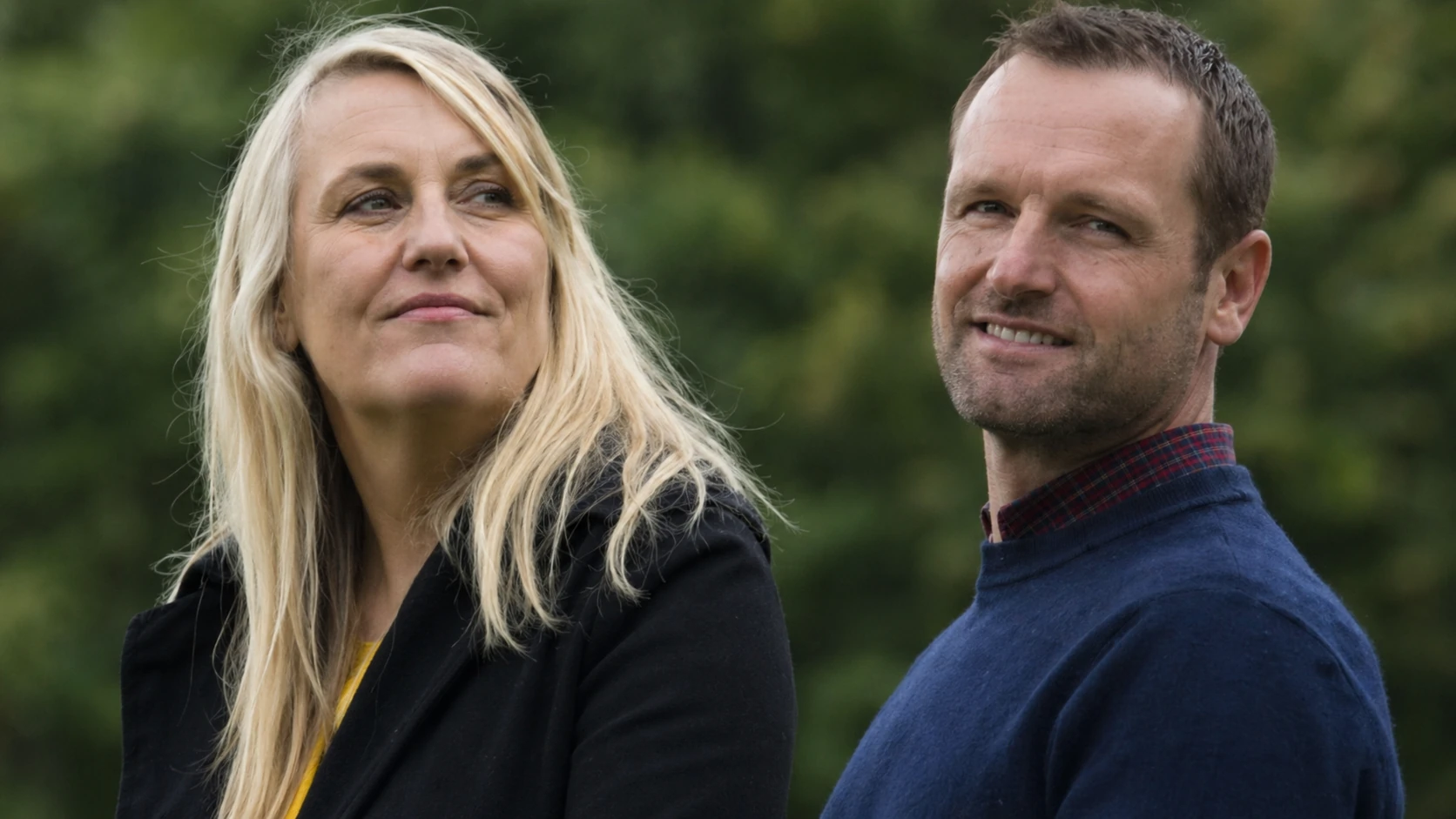
Emma Hayes has spent much of her career standing in the most public places in football: the technical area, the trophy podium, the press conference table, and, now, the job once considered one of the hardest in the women’s game. She built Chelsea Women into a domestic giant, then crossed the Atlantic to lead the United States women’s national team. Her record is public, her voice is familiar, and her influence is hard to miss. Yet the question many readers type into search bars, “Emma Hayes partner,” leads to a much quieter truth: some parts of her life remain firmly private.
Hayes is not a celebrity coach by accident, and she is not private because there is nothing to say. She has spoken openly about motherhood, grief, pressure, ambition, and the physical toll of work. She has also drawn a clear line around her romantic life, including whether she has a partner, spouse, husband, or long-term companion. That boundary matters because any honest biography of Hayes has to tell the difference between what she has shared, what reliable sources confirm, and what the internet merely repeats.
Who Is Emma Hayes?
Emma Hayes is an English football manager best known for her trophy-laden spell as manager of Chelsea Women and her later role as head coach of the United States women’s national team. Born in London in 1976, she grew up in a football-loving environment and developed an early attachment to the sport at a time when girls and women still had far fewer pathways into the game. Her career has stretched across coaching, management, media, leadership, and advocacy for women’s football. By the time she left Chelsea in 2024, she had become one of the most respected figures in the sport.
Her rise did not come through the most obvious route. Hayes did not become famous as a star player before moving into management, which makes her career different from many high-profile coaches. She built her reputation through study, observation, recruitment, player development, tactical clarity, and relentless standards. That background helps explain why she is often described not only as a manager, but as a builder of football institutions.
For many fans, especially newer followers of the U.S. women’s national team, Hayes became a household name after her move from Chelsea to the United States. But in English football, her reputation had been secure for years. She turned Chelsea from a serious women’s club into a dominant force, helping professionalize expectations around training, staffing, culture, and recruitment. Her career has coincided with the broader growth of women’s football, but she has also been one of the people pushing that growth forward.
Is Emma Hayes Married or Does She Have a Partner?

The clearest responsible answer is that Emma Hayes has not publicly confirmed a romantic partner in reliable public sources. There is no firmly verified public record showing that she is married, and there is no confirmed public identity for an Emma Hayes partner. Some online biography pages and informal sites make claims about her relationship status, but those claims are often thinly sourced or not sourced at all. A careful article should not turn repetition into proof.
Hayes has confirmed that she is a mother, and she has spoken publicly about her son Harry. She has also spoken about the loss of Harry’s twin brother, Albie, who was stillborn in 2018. Those are deeply personal details, and Hayes has shared them in contexts that reveal her humanity and resilience. But she has not used those conversations to provide a public account of a spouse, partner, or Harry’s father.
That difference is important. Public curiosity is understandable, especially when a figure becomes as prominent as Hayes. But curiosity is not the same as public entitlement, and a respectful biography should not fill private gaps with guesses. The available record shows a woman who has chosen to be candid about some parts of family life while keeping her romantic life out of the spotlight.
Early Life and Family Background
Emma Carol Hayes was born in Camden, north London, and her upbringing helped shape both her football imagination and her sense of possibility. Her father, Sid, was a major influence, encouraging his daughters to play at a time when girls’ football still lacked the structure and visibility it has today. Hayes has often spoken about football as something embedded in her family environment rather than a career she discovered later. That early exposure gave her both affection for the game and a clear view of its barriers.
North London mattered to her formation. It gave her a local football culture, a competitive edge, and a sense of belonging to a game that was not always built to welcome girls. Hayes grew up in an era before the Women’s Super League, before packed stadiums for domestic women’s fixtures, and before young girls could easily see professional women coaches on television. That lack of visibility did not push her away from football; it seemed to sharpen her determination.
Her early path also shows a theme that would follow her career: she found ways around closed doors. When a playing career became limited, coaching became the route. When the English women’s game lacked resources, she looked abroad. When club football needed more professional structures, she helped create them. Hayes’ later success makes more sense when viewed through that pattern of adaptation.
Education and the Move Toward Coaching
Hayes studied at Liverpool Hope University, where she developed both academically and athletically. Her time in higher education helped widen her view of football beyond the pitch. She became interested in the psychology, structure, communication, and leadership that sit behind team performance. Those interests later became central to her work as a manager.
A serious ankle injury affected her playing ambitions, and that changed the direction of her life. For some players, the loss of a playing pathway can mean leaving the sport altogether. Hayes instead leaned into coaching, where she could use her tactical intelligence and emotional understanding of players. The switch proved decisive because it allowed her to build a career around the whole game, not just her own time on the ball.
She later spent important years in the United States, including coaching roles in the college game and professional women’s football. That period exposed her to a different sporting culture, one where women’s football had stronger institutional support than it did in England at the time. The American experience gave Hayes tactical education, leadership opportunities, and a lasting understanding of U.S. soccer. It also made her eventual return to the United States women’s national team feel less like a sudden leap and more like a full-circle moment.
Building a Coaching Career
Hayes’ coaching career developed across countries and systems, which gave her a broad view of how players grow. She worked in the United States with college and professional teams, learning how recruitment, development, and team identity could be connected. That experience mattered because she was not simply learning how to run training sessions. She was learning how to build programs.
Her early senior roles included time with the Long Island Lady Riders and later the Chicago Red Stars. Those jobs placed her inside American women’s soccer during a period of change, where leagues were still searching for stability and professional models were still developing. Hayes learned from success, pressure, and difficult setbacks. The education was not glamorous, but it gave her practical knowledge that would later serve Chelsea well.
Returning to England, Hayes carried with her a belief that women’s football could be run with elite standards. She understood that talent alone was not enough. Players needed better environments, smarter recruitment, stronger medical support, and a culture that expected to win. That philosophy became the backbone of her Chelsea project.
Chelsea and the Making of a Dynasty
Chelsea appointed Hayes as manager in 2012, and the job became the defining chapter of her club career. At the time, Chelsea Women were not yet the dominant force they would become. The Women’s Super League was still young, investment across the league was uneven, and the professional future of the women’s game was still taking shape. Hayes entered that world with both patience and urgency.
Her early Chelsea years were about more than match results. She had to recruit well, set standards, develop players, and persuade people inside and outside the club that the women’s team deserved serious backing. Chelsea became known for tactical flexibility, competitive toughness, and a dressing room built around strong personalities. Hayes did not merely coach a team; she helped design an elite environment.
The trophies followed. Under Hayes, Chelsea won multiple Women’s Super League titles, FA Cups, League Cups, and other domestic honors. The club became one of the defining teams of the modern English women’s game. Hayes’ success also helped raise expectations for rival clubs, because Chelsea showed what could happen when ambition, money, expertise, and leadership aligned.
The Human Cost of Success
The public version of Hayes’ Chelsea story is filled with medals and title races, but her private life during that period included profound pain. In 2018, while Chelsea were enjoying one of the strongest seasons of her reign, Hayes gave birth to her son Harry. His twin brother, Albie, was stillborn. Hayes later spoke about the loss with striking honesty, describing grief that sat beside professional achievement.
That chapter changed the way many people understood her. She had been known as demanding, funny, intense, and tactically sharp, but her account of losing Albie revealed another layer. It showed a manager carrying private heartbreak while continuing to lead a team in a public job. It also challenged easy assumptions about what success looks like from the outside.
Hayes later reflected on the pressure she placed on herself to return to work quickly after childbirth and loss. Her comments have resonated because they speak to a wider problem in elite sport and professional life. Women are often expected to show resilience in ways that leave little room for recovery. Hayes’ story made that tension visible without turning it into a performance.
Motherhood and Harry
Harry is the family member Hayes has spoken about most openly. She has described the realities of parenting while managing at the highest level, including the exhaustion, the scheduling strain, and the way a child changes a person’s sense of priority. Her public comments about Harry are affectionate but measured. She clearly values him as part of her life, while still protecting him from becoming a public figure in his own right.
Motherhood has also shaped how Hayes talks about work. She has been frank about sleep, recovery, and the challenge of balancing care with elite performance. That honesty separates her from the old model of the coach as someone who must appear untouched by ordinary human needs. Hayes has shown that leadership can include vulnerability without losing authority.
Her move from Chelsea to the USWNT also had a family dimension. Club management is a daily grind, especially at a club competing for several trophies every season. International management brings its own pressure, but it can also create a different rhythm between camps and tournaments. Hayes has indicated that this change gave her more space to be present in Harry’s daily life.
Why Her Partner Remains Private
Hayes’ decision not to publicly identify a partner should be viewed as a boundary, not a mystery that needs solving. Public figures often share selective parts of their lives for understandable reasons. A person may speak about parenthood because it shapes work, health, and public advocacy, while choosing not to speak about romance because it belongs to a private circle. Hayes appears to have drawn exactly that kind of line.
The interest in “Emma Hayes partner” also reflects a broader habit in coverage of successful women. Female leaders are often asked to explain how they manage family, romance, motherhood, and ambition in ways that male leaders rarely are. A male coach with children is usually allowed to be a father without constant questions about who handles the home. Women in comparable roles often receive more personal scrutiny.
That does not mean readers are wrong to be curious. Biography naturally includes relationships, and family can help explain a person’s life. But responsible writing has to treat unconfirmed romantic claims carefully. In Hayes’ case, the verified story is not a marriage story or a partner story; it is a story of a mother, coach, daughter, leader, and survivor of loss.
Public Image and Media Presence
Hayes has always been more than a touchline manager. She is one of football’s most articulate speakers, capable of breaking down tactics in plain language while also speaking forcefully about standards and inequality. Her media work helped broaden her reputation beyond Chelsea supporters. Fans who heard her analyze men’s and women’s football quickly recognized that she had authority, humor, and an unusually direct way of speaking.
Her public image is built around sharpness and candor. Hayes can be warm, but she is not bland. She has challenged media narratives, defended her players, criticized poor conditions, and pushed for better treatment of women’s football. That directness has sometimes made headlines, but it has also earned respect because it usually comes from deep knowledge of the game.
The result is a rare kind of football celebrity. Hayes is famous because she wins, but also because she explains winning well. She can speak as a coach, strategist, advocate, analyst, and parent. That range makes people want to know more about her life, even when some parts of that life remain private.
Money, Salary, and Net Worth
Emma Hayes’ exact net worth is not publicly confirmed, and estimates online should be treated cautiously. Many celebrity net worth figures are compiled from guesses, old reports, and rough assumptions rather than verified financial records. Hayes has earned income through coaching contracts, media work, speaking, writing, and football-related appearances. Still, no reliable public source provides a precise figure for her personal wealth.
What can be said with more confidence is that Hayes’ earning power rose sharply with her success. Her Chelsea tenure made her one of the leading managers in women’s football, and her move to the United States placed her in one of the most prestigious coaching jobs in the global game. The USWNT role is a major appointment with significant visibility, commercial attention, and institutional responsibility. That level of work usually comes with compensation that reflects elite status.
Hayes has also published books and built a public profile beyond match days. Her value is not limited to salary because her expertise has become a recognized brand within football. She is invited to speak not only because she won trophies, but because she can explain leadership and team-building in ways that connect beyond sport. Any claim of a specific net worth should be read as an estimate unless supported by financial disclosure.
Awards, Honors, and Influence
Hayes’ trophy record at Chelsea places her among the most successful managers in women’s club football. She helped lead the club through a period when the Women’s Super League grew from a developing competition into a serious professional product. Her Chelsea teams were known for depth, resilience, attacking quality, and the ability to win under pressure. Those qualities made them a model for other clubs trying to catch up.
Individual honors followed the team success. Hayes received multiple manager-of-the-season awards and gained recognition from football bodies, media organizations, and the wider sporting world. She was also honored for her services to football, reflecting not only her trophy count but her role in changing expectations around the women’s game. Her influence is measured in titles, but also in standards.
The move to the USWNT added a new dimension to that legacy. Taking charge of the United States after a difficult World Cup cycle meant stepping into pressure rather than comfort. Hayes inherited a program with enormous history, impatient expectations, and a new generation of players to guide. Her early success with the team confirmed that her methods could travel across systems and cultures.
The USWNT Chapter
Hayes’ appointment as head coach of the United States women’s national team was one of the most talked-about hires in modern women’s football. The job came with prestige, but also risk. The USWNT had long been the sport’s standard-bearer, yet the global field had tightened, and the United States no longer looked untouchable. Hayes arrived with the task of restoring clarity, confidence, and competitive edge.
Her timing made the challenge even sharper. She finished her Chelsea commitments before fully taking over the U.S. role, leaving a short window before major tournament football. That compressed schedule demanded trust, rapid communication, and clear tactical choices. Hayes’ reputation for building culture quickly became just as important as her tactical résumé.
The success of her early USWNT period strengthened her standing as a coach capable of handling different kinds of pressure. Club football rewards daily work and long-term squad building, while international football demands sharper bursts of preparation and selection judgment. Hayes had to adapt without losing the qualities that made her successful. That adjustment is now part of the story of her career.
Current Status
Emma Hayes remains one of the most visible and influential coaches in world football. Her work with the United States places her at the center of a program with a huge fan base, deep history, and high expectations. She is no longer only the manager who built Chelsea; she is now a global national-team leader. That shift has expanded the audience interested in her personal and professional life.
Her current public identity is shaped by three roles. She is a coach expected to win, a football thinker expected to lead, and a mother who has spoken honestly about the demands of balancing work and family. Those roles do not always sit comfortably together, which is part of why her story connects. Hayes does not present ambition and care as opposites, but she also does not pretend the balance is easy.
The search for her partner will likely continue because public curiosity follows public success. Still, the best available answer remains grounded in restraint. Hayes has not confirmed a partner publicly, and the lack of confirmation should be respected. Her life story is already full without inventing a romantic biography for her.
Frequently Asked Questions
Who is Emma Hayes’ partner?
Emma Hayes has not publicly confirmed a romantic partner in reliable public sources. Some online pages make claims about her private life, but those claims are not consistently backed by direct evidence. The most accurate answer is that her partner, if she has one, has not been publicly identified by Hayes.
Is Emma Hayes married?
There is no verified public confirmation that Emma Hayes is married. Public profiles and interviews have focused on her career, her son Harry, and her experiences as a mother. They do not provide a confirmed spouse or husband.
Does Emma Hayes have a son?
Yes, Emma Hayes has a son named Harry, who was born in 2018. Hayes has spoken about motherhood and the way parenting has affected her life and work. She has also spoken about the loss of Harry’s twin brother, Albie, who was stillborn.
Who is Harry’s father?
Harry’s father has not been publicly confirmed in reliable sources. Hayes has chosen to share some family details while keeping other personal matters private. A responsible biography should not guess at the identity of Harry’s father without confirmation.
Why do people search for Emma Hayes’ partner?
People search for Emma Hayes’ partner because she is a major public figure and because she has spoken about being a mother. Readers often want to understand the family life behind a successful public career. In Hayes’ case, the verified information centers on her son and her career rather than a publicly confirmed romantic relationship.
What is Emma Hayes’ net worth?
Emma Hayes’ exact net worth is not publicly verified. Online estimates should be treated as estimates, not confirmed figures. Her income sources likely include coaching contracts, media work, books, speaking, and football-related appearances.
What is Emma Hayes doing now?
Emma Hayes is the head coach of the United States women’s national team. After leaving Chelsea in 2024, she moved into international management and became responsible for one of the most high-profile teams in world football. Her current work centers on sustaining U.S. success while shaping the next phase of the program.
Conclusion
Emma Hayes’ story is not defined by the unanswered question of a partner. It is defined by a career built through intelligence, conviction, and a rare ability to turn ambition into structure. She has won at club level, stepped into one of the biggest jobs in international football, and changed what many people expect from a women’s football manager.
Her private life matters only where she has chosen to make it part of the public record. She is Harry’s mother, she has spoken movingly about losing Albie, and she has been honest about the cost of combining elite work with family life. Those facts are enough to understand her humanity without pressing into areas she has not opened.
The most respectful answer to the question “Emma Hayes partner” is also the most accurate one: she has not publicly confirmed one. In a culture that often mistakes privacy for secrecy, Hayes offers a different model. She lets the work speak loudly, shares personal truth when it has purpose, and keeps the rest for herself.
That balance may be one reason she remains such a compelling figure. Hayes is public without being fully exposed, candid without being careless, and ambitious without pretending sacrifice is easy. Her legacy is still being written, but it already reaches beyond trophies into the way football talks about leadership, motherhood, grief, privacy, and power.


