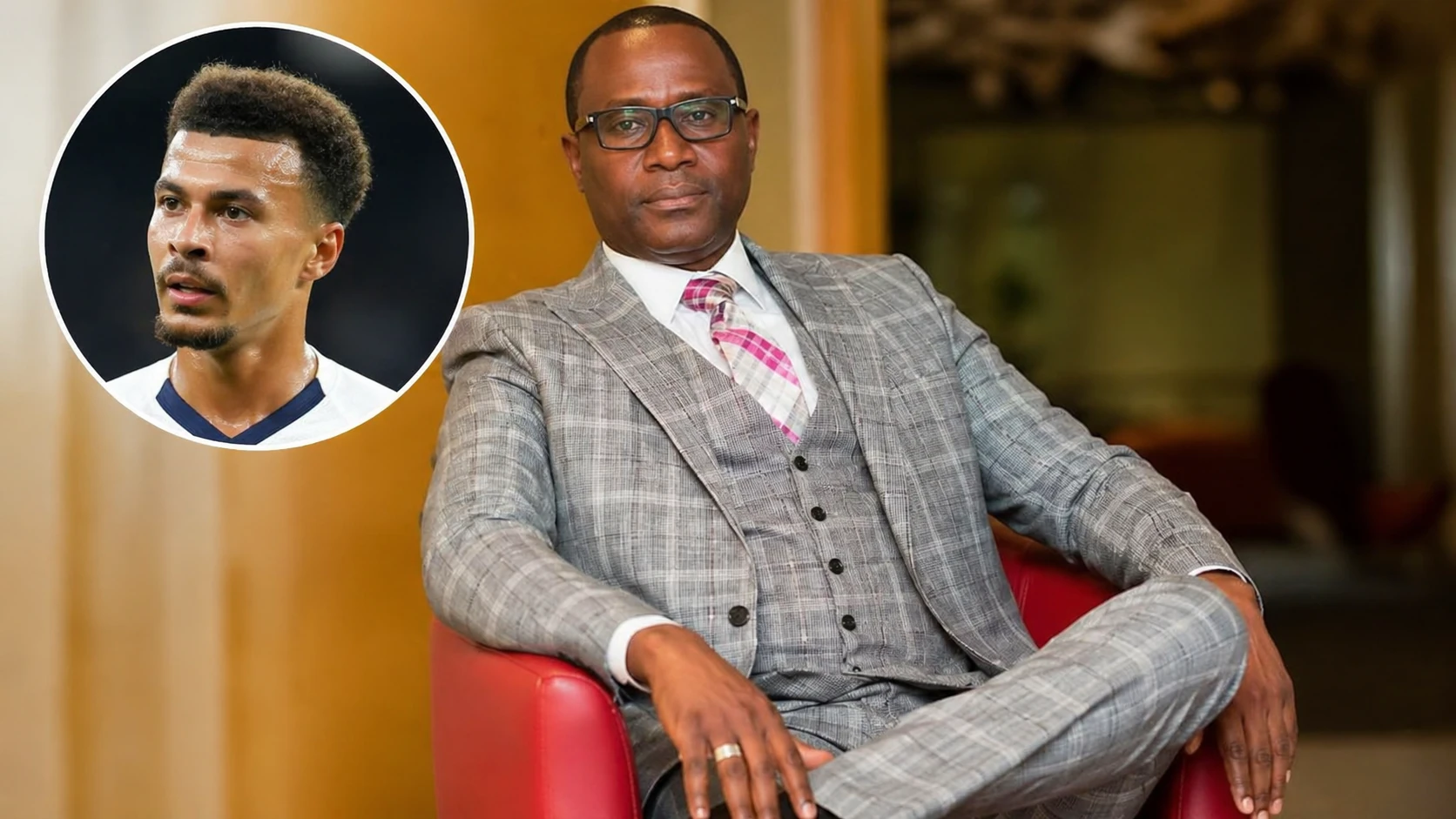
In August 2016, one of England’s brightest young footballers stepped onto the pitch wearing a name that wasn’t quite what fans expected. Instead of “Alli,” the surname that had followed him since birth, the back of his Tottenham Hotspur shirt simply read “Dele.” It was a small visual change, but it carried the weight of a complicated family story. At the center of that story, largely out of sight, is Kehinde Alli — a man known to the public less for his own life than for his connection to a son who became famous.
Kehinde Alli has never lived as a celebrity, and that shapes everything about how he is understood. There are no regular interviews, no memoirs, and no polished public persona. Instead, his presence emerges through official records, scattered media reports, and, most powerfully, through what Dele Alli himself has chosen to share. That leaves a portrait that is incomplete but still meaningful — a biography defined as much by absence as by fact.
Early Life and Background
Publicly available information about Kehinde Alli’s early life is limited, and that lack of detail has allowed speculation to fill the gaps. What can be said with reasonable confidence is that he is Nigerian by nationality and part of the generation that pursued education and work opportunities across borders in the late 20th century. Some reports suggest he studied in the United Kingdom, including a period at De Montfort University, though detailed academic records are not widely available in the public domain.
Accounts of his background often describe him as coming from a Yoruba family, one of Nigeria’s largest ethnic groups, but those claims are typically based on secondary reporting rather than formal records. The truth is that much of his early life has not been documented in a way that meets the standard of verifiable biography. What remains clear is that his life intersected with the UK at a time when many Nigerian professionals were building careers abroad.
The absence of detailed early-life information is not unusual for individuals who are not public figures in their own right. Kehinde Alli’s story did not attract attention until his son’s rise to international football fame made people curious about the family behind the player. That shift from private citizen to subject of public interest happened without the usual supporting record that comes with public life.
Meeting Denise and the Birth of Dele
Kehinde Alli’s relationship with Denise Alli, Dele’s mother, is often described in media reports as the starting point of the family story that later became widely known. According to widely circulated accounts, the two met in the United Kingdom during a period when Kehinde was studying or working there. Their relationship led to the birth of Bamidele Jermaine Alli on April 11, 1996, in Milton Keynes.
The relationship between Kehinde and Denise did not last, and they separated when Dele was still very young. This early separation set the stage for a childhood that would later be described by Dele himself as unstable and difficult. While both parents have been referenced in various reports over the years, neither has maintained a consistent public narrative, which has contributed to the fragmented nature of the story.
Dele’s name itself reflects both sides of his heritage. “Bamidele” is a Yoruba name meaning “follow me home,” a connection to his Nigerian roots. Yet his upbringing would largely take place in England, creating a dual identity that later became part of his public image as an England international with Nigerian ties.
A Life Between Countries
One of the most frequently discussed aspects of Kehinde Alli’s relationship with his son is the period when Dele spent time in Nigeria. Dele has spoken about being sent to Africa as a child “to learn discipline,” a phrase that has been widely quoted and often interpreted in different ways. Media reports suggest that he lived in Lagos with his father during part of his childhood, though the exact timeline and circumstances are not fully documented.
What’s clear is that this period formed part of a broader pattern of movement between environments. Dele’s childhood included time with his mother, time in Nigeria, and eventually a move into the care of the Hickford family in England. Each of these transitions played a role in shaping his development, both as a person and as a footballer.
The Nigeria chapter has sometimes been simplified in public discussions, reduced to a single explanation or framed as a turning point. But childhood experiences rarely fit neatly into one narrative. For Dele, it was one part of a wider story that included both support and hardship, and for Kehinde, it represents a connection that remains part of his public identity even as details remain private.
Business Career and Public Records
Unlike his son, Kehinde Alli has not built a career in the public eye, but there are official records that offer a glimpse into his professional life. United Kingdom Companies House filings list a Kehinde Alli as having served as a director and company secretary of Twintech Services Limited, a business registered in Milton Keynes. His tenure in those roles was relatively brief, beginning in September 2000 and ending in July 2001.
These filings also identify him as Nigerian and provide a partial timeline of his presence in the UK at the time. They do not, however, support the broader claims often found online about extensive business ventures, large-scale investments, or significant wealth. Such claims appear frequently in celebrity-adjacent biographies but are rarely backed by verifiable documentation.
There are also references in various reports to work in Canada and later in Nigeria, but again, these details are not supported by a consistent set of primary records. It is fair to describe Kehinde Alli as someone who has been involved in business activities, but the scale and nature of those activities remain largely unverified in public sources.
The gap between documented fact and widely circulated claims is a recurring theme in his biography. It reflects the way information spreads online, particularly when linked to a well-known figure like Dele Alli. Without careful verification, assumptions can quickly become accepted as fact.
Relationship with Dele Alli
The relationship between Kehinde Alli and his son is one of the most sensitive aspects of his public story. For many years, it was discussed in fragments, with occasional reports suggesting attempts at reconciliation or communication. However, the clearest account has come directly from Dele himself.
In a widely viewed 2023 interview, Dele spoke openly about his childhood, describing experiences of trauma, instability, and emotional pain. He also stated that he no longer maintains contact with his biological parents, including his father. His words were measured but firm, reflecting a decision shaped by personal experience rather than public pressure.
That statement carries significant weight because it is the most direct insight into the relationship from one of the people involved. At the same time, it is important to recognize that it represents one perspective in a deeply personal and complex family history. There has been no equally detailed recent response from Kehinde Alli in the public domain.
Earlier media reports had suggested that Kehinde expressed a desire to reconnect with his son, particularly during the height of Dele’s football success. Those reports painted a picture of a father seeking a renewed relationship, but they were not followed by sustained public dialogue. As a result, the current status of their relationship is best understood through Dele’s own statements.
The Name Change and Public Symbolism
The decision by Dele to drop “Alli” from his shirt in favor of “Dele” was more than a branding choice. It was a public declaration of identity, one that reflected his personal feelings about his family background. For fans and observers, it raised questions about his relationship with his father and the meaning of the name he chose to set aside.
At the time, Dele explained that he wanted to represent himself as an individual rather than be defined by a surname he did not feel connected to. That explanation was simple, but its implications were widely discussed. In football, a name on a shirt is a powerful symbol, seen by millions and tied to a player’s reputation.
For Kehinde Alli, the change reinforced his position as a figure linked to his son’s story but not actively shaping its public narrative. It highlighted the distance between them and underscored the way personal decisions can become public statements when made by someone in the spotlight.
Media Portrayal and Public Perception
Kehinde Alli’s public image has largely been shaped by media coverage rather than direct engagement. This has led to a mix of portrayals, ranging from sympathetic accounts of a father seeking reconnection to more critical interpretations based on Dele’s later statements. Without consistent input from Kehinde himself, these portrayals remain incomplete.
The media often faces a challenge in covering figures like him. On one hand, there is clear public interest due to his connection to a well-known athlete. On the other, there is a responsibility to avoid speculation and respect the boundaries of private life. The result is coverage that can feel fragmented, with different outlets emphasizing different aspects of the story.
Public perception tends to follow the most visible narrative, which in this case has been shaped by Dele’s career and personal disclosures. As a result, Kehinde Alli is often viewed through the lens of that narrative rather than as an individual with a fully documented life story.
Financial Status and Net Worth
One of the most common questions about Kehinde Alli relates to his financial status. Many online sources claim specific net worth figures, sometimes presenting them as established facts. However, there is no widely recognized or verifiable source that confirms these numbers.
Without audited financial records, public company accounts, or inclusion in credible wealth rankings, any estimate of his net worth should be treated with caution. It is reasonable to assume that he has been involved in business activities, given his company director role, but the scale of his wealth remains unclear.
This uncertainty highlights a broader issue with online biographies, where the desire for complete profiles often leads to the inclusion of unsupported financial claims. For readers seeking accurate information, it is better to rely on documented facts and acknowledge the limits of available data.
Where Kehinde Alli Is Now
Kehinde Alli has remained largely out of the public eye in recent years. There are no regular public appearances, interviews, or confirmed updates about his current activities. This absence is consistent with a life lived privately, even as interest in his story continues.
What is known is that his name remains tied to his son’s journey, particularly as Dele works to rebuild his career and personal life. In 2025, Dele signed with Italian club Como in an attempt to return to regular football, a move that drew attention to his ongoing efforts to move forward. While Kehinde is not part of that public narrative, his connection to it remains.
The lack of recent information does not diminish his role in the story, but it does mean that any account of his current life must be cautious. Without verified updates, it is more accurate to say that he continues to live privately than to speculate about his circumstances.
Frequently Asked Questions
Who is Kehinde Alli?
Kehinde Alli is best known as the biological father of English footballer Dele Alli. He is Nigerian and has been linked to business activities, including a brief period as a company director in the United Kingdom. His public profile is limited, and most information about him comes through his connection to his son.
What is Kehinde Alli’s nationality?
Kehinde Alli is Nigerian. This has been confirmed through official records, including company filings in the United Kingdom that list his nationality.
Is Kehinde Alli wealthy?
There are many claims about his wealth online, but there is no reliable public evidence that confirms a specific net worth. Without verified financial records, any figures should be treated as estimates or speculation.
What is his relationship with Dele Alli?
Dele Alli has stated publicly that he does not have contact with his biological parents, including his father. This reflects a personal decision based on his experiences, and there has been no detailed public account from Kehinde Alli in response.
Did Dele Alli live with his father in Nigeria?
Dele has said that he spent time in Africa during his childhood, and media reports suggest he lived in Nigeria with his father for a period. However, the exact details of this arrangement are not fully documented.
Why did Dele Alli drop the name “Alli”?
Dele chose to wear only his first name on his shirt as a way of representing himself independently. He explained that he did not feel a strong connection to the surname and wanted to define his own identity.
Conclusion
Kehinde Alli’s biography is unusual because it is shaped more by connection than by visibility. He is a figure who exists in the public record largely because of his son’s fame, yet his own life has remained mostly private. That contrast makes his story both compelling and difficult to tell with complete certainty.
What emerges from the available information is a portrait of a man linked to a global football story but not defined by public presence. His role in Dele Alli’s early life is part of a broader narrative that includes movement across countries, family separation, and personal challenges that have been described by Dele himself.
The gaps in the record are not flaws but reminders of the limits of public knowledge. Not every life connected to fame is fully documented, and not every story can be told in full detail. Kehinde Alli remains, in many ways, a private figure in a very public narrative.
That may be the most accurate way to understand him. His significance lies not in a list of achievements or a polished biography, but in the connection that brought his name into view and the human story that continues to unfold around it.


