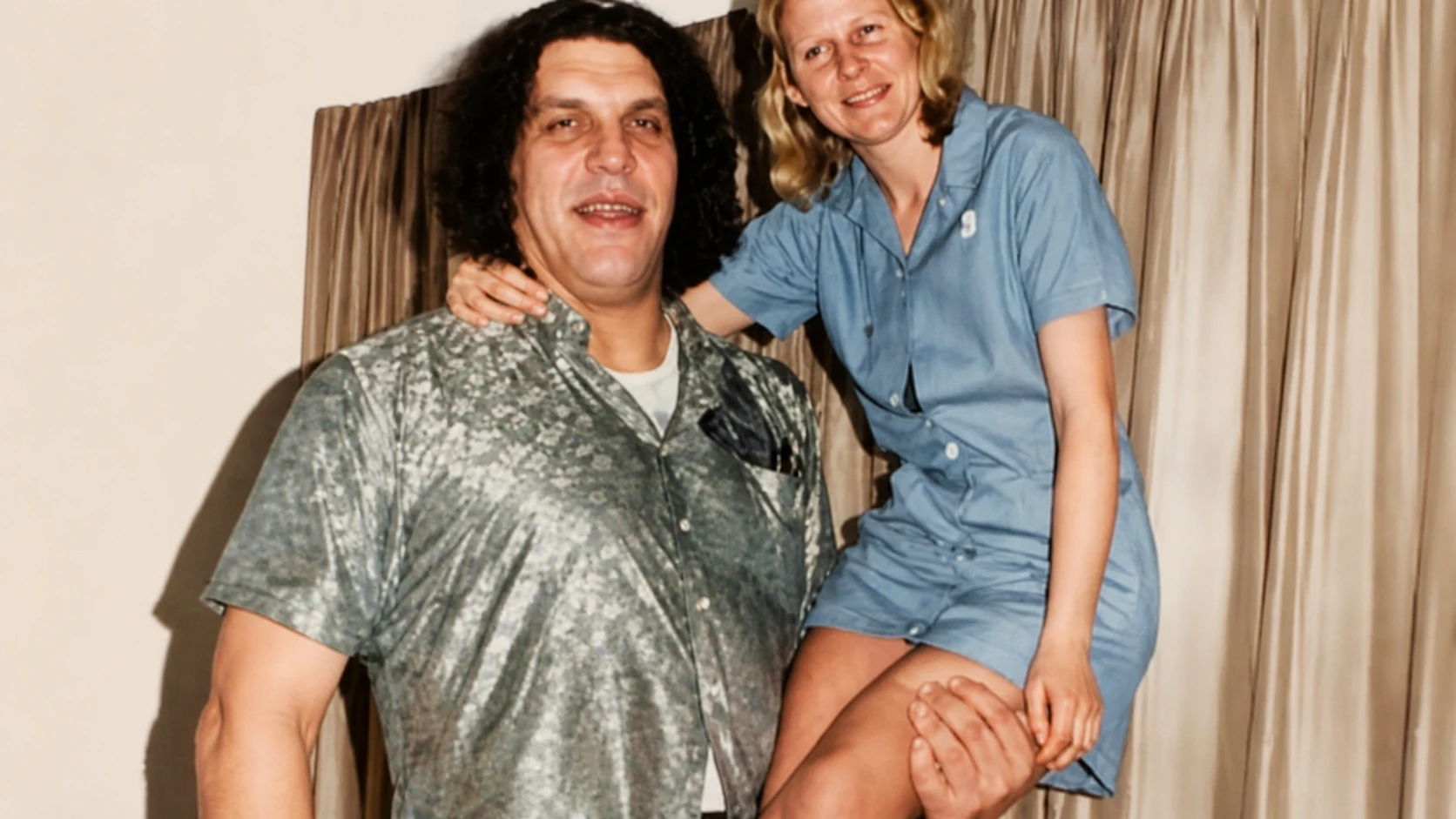
Jean Christensen is remembered today because of a connection to one of the most famous figures professional wrestling has ever produced, but her own story is quieter, harder to document, and more human than most search results suggest. She was the former partner of André René Roussimoff, known around the world as André the Giant, and the mother of his only known child, Robin Christensen-Roussimoff. For many readers, her name appears as a footnote in André’s biography, yet that footnote opens onto a larger story about family, fame, privacy, and the people left outside the spotlight.
The truth is, Jean Christensen was not a celebrity in the usual sense. She did not spend decades giving interviews, building a public career from her connection to André, or turning her private life into a brand. What is publicly known about her comes mostly through wrestling history, biographical accounts of André, and the later public presence of their daughter, Robin. That limited record makes her a difficult subject, but also a revealing one, because it shows how fame can preserve one person in myth while leaving those closest to him only partly visible.
Who Was Jean Christensen?
Jean Christensen was an American woman best known for her relationship with André the Giant and for being the mother of Robin Christensen-Roussimoff. Public accounts generally place her in or near the professional wrestling world during the 1970s, the same period when André was becoming a major attraction in North America. Some profiles describe her as having worked in wrestling publicity or wrestling-related promotion, though detailed documentation of her career remains thin. What can be said carefully is that her life intersected with the wrestling business at a time when André’s career was expanding rapidly.
Her public identity has been shaped almost entirely by that relationship. Unlike André, Jean did not have a ring persona, film role, official sports record, or decades of archived interviews. She appears in the record because she mattered to André’s private life and because she raised the daughter who would later become part of his public legacy. That makes her story different from the story of a performer, but no less important to understanding the family behind the legend.
Writers have sometimes treated Jean as a mystery to be solved, but the better approach is to recognize the limits of the record. Many details about her early life, schooling, parents, and hometown have not been firmly established in widely trusted public sources. Responsible biography has to leave room for that uncertainty rather than filling gaps with attractive guesses. Jean’s life deserves the same care that would be given to any private person drawn into fame by association.
Early Life and Family Background
The early life of Jean Christensen is not well documented in mainstream public records. Her birthdate, childhood home, education, and family background are not consistently reported by reliable biographical sources. Some online accounts offer details about her origins, but many of those claims appear without clear sourcing and are repeated across websites in nearly identical language. For that reason, any serious profile has to be honest: the public record does not provide a full, verified childhood portrait.
That absence may feel unsatisfying, but it is also part of the story. Jean came from a generation in which women connected to sports and entertainment figures were often recorded only after they became relevant to a famous man’s life. If they were not performers themselves, they were usually described as wives, girlfriends, mothers, assistants, or publicists, rather than as full people with their own histories. Jean’s biography reflects that old imbalance in how fame gets archived.
What seems clear is that she was an adult working around the orbit of professional wrestling during the period when she met André. Wrestling in the 1970s was a demanding, travel-heavy business with regional promotions, live events, and backstage relationships that were rarely documented in formal ways. The people who worked behind the scenes often handled publicity, logistics, promotion, and relationship management without becoming publicly known. Jean appears to have belonged to that world before her name became linked to André’s family story.
Meeting André the Giant
Jean Christensen is most often said to have met André the Giant through the wrestling business in the early 1970s. André had already begun building the career that would make him one of the most recognizable athletes and entertainers of his era. Born in France in 1946, he became famous for his enormous size, which was associated with gigantism and acromegaly, and for the charisma that helped make him more than a physical attraction. By the time he was wrestling across North America, he was promoted as a rare spectacle, a man audiences felt they had to see in person.
The world around André was intense and unstable. He worked city after city, often appearing as a special attraction rather than a regular local wrestler. His schedule demanded constant travel, and his fame grew in a business that mixed athletic performance, character work, promotion, and mythmaking. Anyone who entered his personal life also entered the pressure of that machine.
Jean’s connection to André should be understood against that background. This was not a conventional relationship formed in ordinary circumstances, with regular evenings at home and predictable plans. André’s body, fame, and career made normal life unusually hard. For Jean, loving or living alongside such a figure would have meant dealing with the demands of a man who belonged, in many ways, to promoters, audiences, and the road.
Relationship With André the Giant
The relationship between Jean Christensen and André the Giant has often been described in shorthand, but the shorthand can be misleading. Some online accounts call her André’s wife, while other biographical sources state that they were not married. Because the public record conflicts, the most accurate wording is that Jean was André’s former partner and the mother of his only known child. That distinction matters because marriage is a legal and personal fact, not a label that should be assumed.
Their relationship appears to have been complicated, especially after the birth of their daughter. André’s career kept him away for long stretches, and accounts of his personal life suggest that regular fatherhood was difficult for him to sustain. Jean, by contrast, became the parent most closely associated with Robin’s daily upbringing. That imbalance shaped how the family would later be remembered.
There is no need to turn that story into melodrama. André was a beloved public figure, and many who knew him described warmth, humor, and generosity. But affection and presence are not the same thing, and a child’s life is built from the parent who shows up day after day. Jean’s place in the story is important because she seems to have carried much of that ordinary responsibility while André’s extraordinary career continued.
Motherhood and Robin Christensen-Roussimoff
Jean Christensen’s most clearly documented role was as the mother of Robin Christensen-Roussimoff. Robin was born in 1979 and is widely identified as André the Giant’s only child. Her birth connected Jean permanently to one of wrestling’s most famous families, though the family itself did not function in the public, polished way fans might imagine. The story of Jean and Robin is less about glamour than about distance, recognition, and the difficult private side of fame.
Robin has spoken publicly at times about having limited contact with her father during childhood. Several accounts have reported that she saw André only a small number of times before his death in 1993. Those details are painful because they cut against the affectionate image many fans hold of André. They also help explain why Jean matters: she was the parent present in the life of a child whose father was known everywhere but not always available at home.
Raising Robin likely meant living with a strange contradiction. André’s name was famous, his image was marketable, and his body was part of pop culture history. Yet that fame did not automatically translate into a settled family life. Jean’s motherhood took place in the shadow of a man millions recognized, but the work of parenting remained private, repetitive, and largely unseen.
The Question of Marriage
One of the most common questions about Jean Christensen is whether she was André the Giant’s wife. The answer is more complicated than many short biographies admit. Some web profiles refer to her as his wife, but better-known biographical summaries often say Jean and André were not married. Without a clear public marriage record accepted across reliable sources, it is safer not to present the marriage claim as fact.
This confusion is partly a result of how celebrity family histories get simplified over time. A woman who had a child with a famous man is often casually called a wife, especially in search summaries and fan-written biographies. In wrestling history, where storytelling and reality have long overlapped, imprecise labels can spread quickly. Once repeated often enough, they begin to look settled even when the evidence remains weak.
Jean’s dignity does not depend on whether she and André were legally married. Her importance comes from the relationship itself and from her role as Robin’s mother. Treating the marriage question carefully does not reduce her place in the story. It simply keeps the biography honest.
Life Beside a Man Larger Than Life
André the Giant’s fame was unlike ordinary celebrity because it began with his body. He was billed at enormous height and weight, and promoters presented him as “the Eighth Wonder of the World.” Crowds came not only to watch him wrestle, but to witness him. That kind of fame can be isolating, because it turns the person into a public event wherever he goes.
For Jean, that reality would have shaped the relationship in practical ways. Travel, hotel rooms, medical strain, public attention, and André’s physical discomfort were not background details; they were part of daily life around him. He was celebrated for the same condition that caused him pain and shortened his life. The people close to him had to live near both the applause and the cost.
That said, Jean’s story should not be reduced to suffering near a famous man. She appears to have chosen privacy, or at least lived in a way that did not invite public exposure. In a culture that often rewards people for exploiting celebrity connections, that reserve is meaningful. It suggests a life that was not organized around public attention, even though public attention eventually found her name.
Career and Work Around Wrestling
Jean Christensen’s career is one of the least clearly documented parts of her biography. Many accounts say she worked in the wrestling business, sometimes describing her as a publicist or public relations figure. That description fits the context in which she reportedly met André, but the details are not strongly preserved in widely available records. There are no widely cited career archives, official résumés, or major interviews that lay out her professional path in full.
Still, the idea that Jean worked around wrestling is believable within the broader history of the business. Regional wrestling promotions depended on many people who were not wrestlers: promoters, press contacts, travel coordinators, venue staff, photographers, office workers, and local representatives. Their labor helped create the illusion and excitement fans saw in arenas. Most of those workers never became famous, even when they knew the biggest names in the business.
If Jean did work in promotion or publicity, she would have occupied an important but underrecognized position. Wrestling in that era required constant selling, from newspaper items and radio spots to local appearances and press relationships. André’s rise depended on promoters understanding how to present him without overexposing him. Jean’s possible role in that world helps explain how she and André could have met, but the record does not support turning her into a major public industry figure without proof.
Public Image and Private Reality
Jean Christensen’s public image is unusual because it was mostly created after the fact. She did not shape it through interviews, television appearances, or memoirs. Instead, it grew through references in biographies of André, profiles of Robin, and online articles trying to answer search questions. That gives the public a version of Jean built from fragments rather than from her own voice.
The private reality was almost certainly more complex. She was not just “André’s partner” or “Robin’s mother,” even though those are the roles that survive in public memory. Like anyone else, she had a family, work, friendships, habits, disappointments, and ambitions beyond the famous relationship. The problem is that those parts of her life were not preserved in the same way André’s matches and film appearances were preserved.
This is a common issue in biographies of people attached to major celebrities. The famous figure leaves a trail of footage, interviews, contracts, photos, and public records. The less famous partner often leaves scattered mentions and secondhand summaries. A respectful article has to acknowledge the imbalance without pretending it can fully repair it.
Money, Estate, and Net Worth Claims
Searches for Jean Christensen often include questions about money, but this is an area where caution is necessary. There is no widely trusted public estimate of Jean Christensen’s personal net worth. Many websites that publish celebrity net worth figures do so without showing records, and those numbers should not be treated as reliable. For Jean, whose independent career and finances were not public, firm claims about wealth would be irresponsible.
André the Giant earned significant money during his career by the standards of professional wrestling in his era, especially through major wrestling appearances, international bookings, merchandise, and his acting work. His most famous screen role came as Fezzik in the 1987 film The Princess Bride, which introduced him to audiences beyond wrestling. After his death in 1993, his image remained valuable through documentaries, licensing, wrestling retrospectives, and fan culture. Robin Christensen-Roussimoff has often been described as connected to his estate and likeness rights, though the exact financial arrangements are private.
Jean’s financial life should not be confused with André’s public legacy. Being the mother of his child does not automatically mean her own wealth can be calculated from his fame. The most honest answer is that Jean’s personal net worth is not publicly verified. Any specific number presented without documentation should be treated as an estimate at best and, in many cases, as pure guesswork.
André’s Death and Its Effect on the Family
André the Giant died in January 1993 in Paris after traveling to France for his father’s funeral. He was 46 years old, and his death marked the end of a career that had already become legendary. For fans, his passing turned him into a figure of memory and tribute. For Jean and Robin, it closed the possibility of a different family future.
By the time André died, his relationship with Robin had already been shaped by years of distance. Death made that distance permanent. For a daughter, the loss of an absent father can be complicated because grief mixes with unanswered questions. For Jean, it likely meant helping Robin carry both the public celebration of André and the private reality of what their family had been.
After his death, André’s image continued to grow rather than fade. WWE honored him repeatedly, fans kept his matches alive through video and memory, and The Princess Bride became a lasting cultural favorite. That continued attention meant Robin’s connection to him remained public. Jean, though less visible, remained part of that story because she was the parent who linked Robin to André’s private life.
Later Years and Death
Jean Christensen’s later years were not lived in the public eye. Many online summaries state that she died in 2008, though detailed mainstream reporting about her death is limited. Because she was a private person, there is not a large public archive of her final years, health, residence, or personal reflections. That absence should be treated with respect rather than suspicion.
Her death, as commonly reported, came before the renewed documentary attention that brought André’s life to a new generation of viewers. HBO’s 2018 documentary André the Giant featured family context and helped reframe André not only as a wrestling icon but as a man living with pain, fame, and personal limits. Robin’s presence in later public events gave audiences a living connection to André’s family. Jean was not there to tell her own side, which makes careful wording even more necessary.
The lack of public detail can make her seem more distant than she was. But private people do not owe the public a complete record simply because they once loved someone famous. Jean’s story survives in the spaces where private life meets public memory. That is enough to make her historically relevant, even if it does not give readers every answer they want.
Jean Christensen’s Place in Wrestling History
Jean Christensen was not a wrestler, manager, or famous on-screen character, but she still belongs in the broader history of professional wrestling. Wrestling history is not only made by the people who step through the ropes. It is also shaped by families, partners, promoters, publicists, and children who live with the consequences of the business. Jean’s life shows how the industry reached into private homes and relationships.
Her connection to André also reveals something about the cost of attraction-based fame. André’s body made him a global draw, but it also made him a person constantly watched, booked, discussed, and physically burdened. The business profited from his size while his private life struggled under the same condition. Jean and Robin were part of the human circle around that reality.
That is why Jean’s name continues to matter. She gives readers a way to see André’s life from another angle, away from the slam, the bodyslam, the film role, and the legend. Through her, the story becomes less about spectacle and more about family. That does not make it less interesting; it makes it more real.
Common Myths and Misunderstandings
The biggest misunderstanding about Jean Christensen is that her biography is fully known. It is not. Her public record contains major gaps, especially around her early life, education, career details, and later years. Any profile that presents a perfectly smooth timeline should be read with caution.
Another common mistake is treating every repeated online claim as confirmed. The internet has a way of copying uncertain details until they appear authoritative. This is especially true for people connected to celebrities but not famous enough to have their own deep archive. Jean has been affected by that pattern, with claims about marriage, work, and money repeated far more often than they are proven.
A third misunderstanding is that Jean was merely a supporting character in André’s life. From a public fame perspective, that may be how she appears, but from Robin’s perspective she was central. The parent who raises a child often shapes that child’s life more deeply than the parent whose name attracts headlines. Jean’s importance comes from that lived role, not from the amount of footage or publicity attached to her name.
Where Jean Christensen Is Now in Public Memory
Jean Christensen is now remembered mostly through articles, fan questions, and references connected to André the Giant’s family. She is not a recurring public figure because her life ended outside the public stage, and because she did not leave behind a major body of interviews. Her daughter Robin has become the more visible family representative in recent years. Through Robin, Jean’s role remains indirectly present.
Public memory can be unfair to private people. It tends to preserve whatever is easiest to label, which is why Jean is often reduced to “André the Giant’s wife” or “André the Giant’s baby mama.” Both labels are inadequate, and one may be factually wrong depending on the source. A more careful memory would call her André’s former partner and Robin’s mother, while admitting that much of her own life remains private.
That careful memory matters because it changes the tone of the story. Jean does not need to be exaggerated to be worth knowing about. She matters because she stood at the private center of a public legend’s family life. In the history of fame, that is often where the most revealing stories are found.
Frequently Asked Questions
Who was Jean Christensen?
Jean Christensen was the former partner of André the Giant and the mother of his only known child, Robin Christensen-Roussimoff. She is most widely known because of that family connection, rather than for a public entertainment career of her own. Public accounts often place her around the professional wrestling business during the time she met André. Many details about her early life and personal background remain unconfirmed in reliable public records.
Was Jean Christensen married to André the Giant?
Sources conflict on this point, so the marriage claim should be handled carefully. Some online articles call Jean Christensen André the Giant’s wife, while other biographical accounts state that they were not married. Without a clear, widely accepted marriage record, the most accurate description is that she was his former partner. She was also the mother of his daughter, which is the most important confirmed family connection.
Did Jean Christensen have children?
Jean Christensen had a daughter, Robin Christensen-Roussimoff, with André the Giant. Robin was born in 1979 and is widely recognized as André’s only child. She grew up largely away from her father’s daily life because André’s wrestling career required constant travel. In adulthood, Robin has been connected to André’s legacy through documentaries, public appearances, and family-related recognition.
What was Jean Christensen’s job?
Jean Christensen is often described as having worked in or around professional wrestling, sometimes in publicity or public relations. The exact details of her career are not well documented in major public sources. It is reasonable to say she was connected to the wrestling world, but specific claims about titles, employers, and career milestones should be treated with care. Her public identity remains tied mainly to André and Robin.
What was Jean Christensen’s net worth?
There is no reliable public figure for Jean Christensen’s net worth. Some websites publish estimates about people connected to celebrities, but those figures are often unsourced and should not be treated as fact. Jean’s personal finances were private, and her independent income sources are not well documented. Any precise number attached to her wealth should be viewed skeptically unless supported by records.
When did Jean Christensen die?
Many online summaries state that Jean Christensen died in 2008. Detailed mainstream reporting about her death is limited, which means the date is widely repeated but not richly documented in public biographical sources. What is clear is that she had died before much of the later documentary attention surrounding André’s life. Her daughter Robin became the more visible family figure in the years that followed.
Why is Jean Christensen still searched today?
Jean Christensen is searched today because readers want to understand André the Giant’s private life. People often discover her name while looking for information about André’s daughter, marriage, family, or estate. Her story answers part of a larger question: what was life like around a man who became a global attraction but struggled with ordinary family closeness? That question keeps her name connected to André’s legacy.
Conclusion
Jean Christensen’s life cannot be told with the fullness of a celebrity who spent decades in public view. The known record is too limited for that, and pretending otherwise would do her a disservice. What remains is a quieter but still meaningful biography: a woman connected to professional wrestling, loved by or linked to one of its most famous figures, and remembered above all as the mother of his child.
Her story also asks readers to think differently about fame. André the Giant’s legend was built in arenas, films, interviews, and fan memory, but Jean’s story lived closer to home. She represents the private side of a public life, the part that does not always fit neatly into tribute videos or nostalgic retellings. Without her, the family story of André and Robin is incomplete.
The most respectful way to remember Jean Christensen is not to inflate her life with unsupported detail. It is to give her the dignity of accuracy, privacy, and context. She was not simply a name attached to André the Giant. She was part of the human reality behind the myth, and that is why readers still look for her today.


