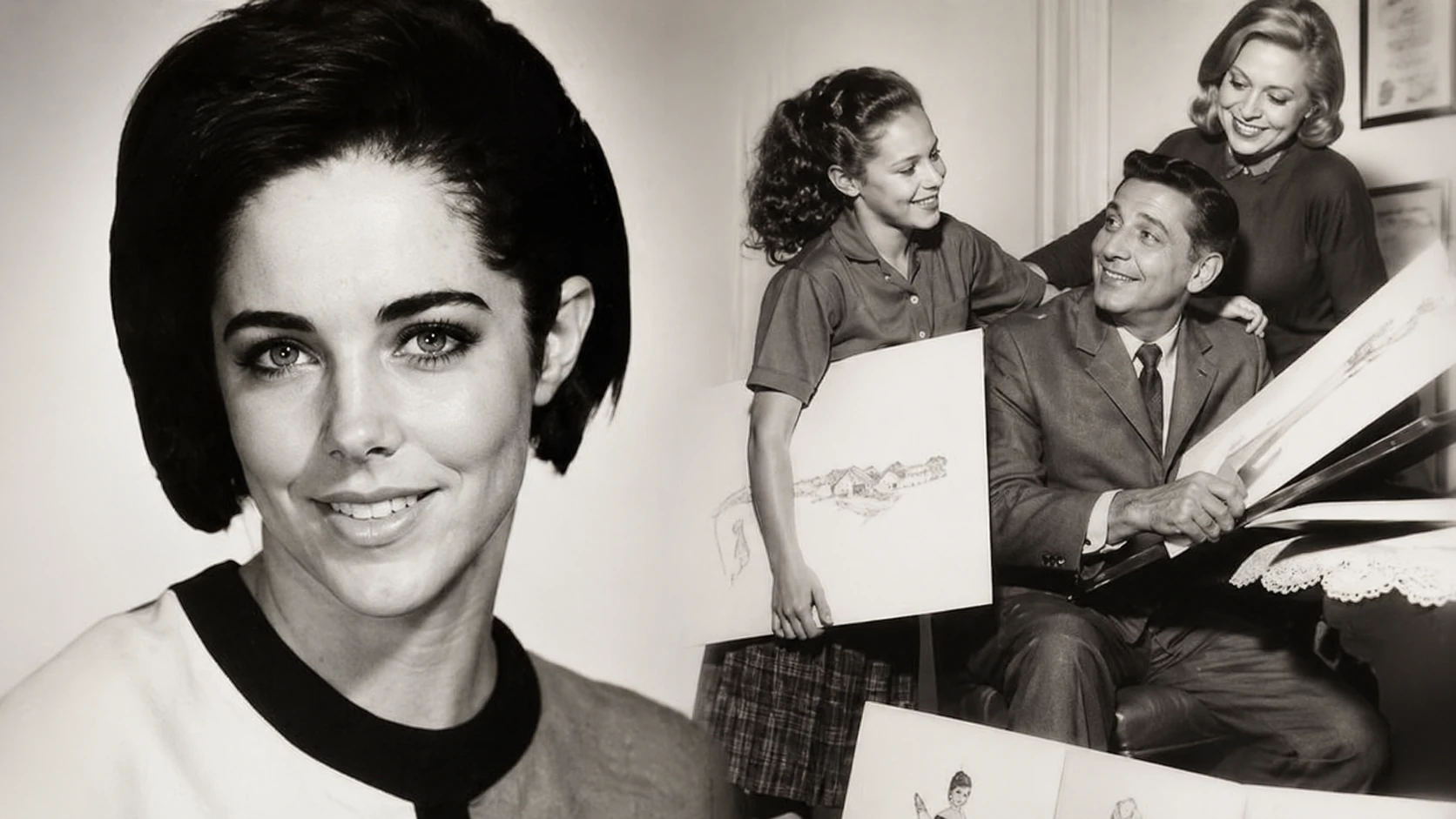
Nia Novella Travilla lived close to Hollywood without ever becoming part of its public machinery. Her name surfaces in connection with two figures who did: her father, costume designer William “Travilla” Travilla, and her mother, actress and performer Dona Drake. For many readers, that connection is the reason they search for her. But the story that emerges is not one of celebrity in the usual sense. It is the quieter account of a woman born into a well-known creative family who appears to have chosen a life largely outside the spotlight.
Unlike many children of film-era personalities, Nia did not leave behind a widely documented public career. There are no major interviews, no credited film roles, and no steady presence in entertainment archives. Instead, what survives are fragments: birth records, family references, and a handful of biographical details that sketch a life lived on her own terms. That gap between public curiosity and available fact is what makes her story both challenging and worth telling.
Early Life and Family Background
Nia Novella Travilla was born on August 16, 1951, in Los Angeles, California. She was the only child of William Travilla and Dona Drake, both of whom had established careers in the entertainment industry by the time she was born. Growing up in Los Angeles meant growing up near the center of American film production, but proximity did not automatically translate into participation.
Her father, William Travilla, was already building a reputation as a costume designer during the 1950s. He worked within the studio system at a time when wardrobe departments played a critical role in shaping a film’s visual identity. His work would later become closely associated with Marilyn Monroe, particularly the now-iconic white dress from The Seven Year Itch. That image, frozen in cinematic history, ensured his name would remain tied to Hollywood glamour long after the films themselves faded from daily conversation.
Nia’s mother, Dona Drake, had a very different career path. Born Eunice Westmoreland, she worked as a dancer, singer, and actress during the 1930s and 1940s. Her career reflected the complicated racial dynamics of Hollywood at the time. Drake was often marketed with shifting identities, sometimes presented as Latina or racially ambiguous in ways that obscured her African American heritage. This shaped not only her roles but also the way she was introduced to audiences.
For Nia, this meant growing up in a household shaped by both visibility and reinvention. Her father’s work was visible on screen, while her mother’s public identity was carefully constructed behind the scenes. It is impossible to say exactly how this influenced Nia personally, but it clearly placed her in a family where image, identity, and performance were constant undercurrents.
Childhood in a Hollywood Household
Nia’s childhood unfolded during a period when Hollywood was transitioning from the studio system’s peak into a more modern, less centralized industry. Her father’s career continued through this shift, and his work remained respected within costume design circles. At home, however, the reality would have been less glamorous than the films suggested.
Children of industry professionals often experience a blend of ordinary domestic life and occasional glimpses of extraordinary surroundings. Nia likely had access to studio environments, fittings, and industry gatherings, but there is no strong evidence that she was groomed for a public career. Unlike many Hollywood families, there are no widely documented efforts to position her as a performer or public figure.
Her mother’s career had slowed by the time Nia was growing up, and Drake faced health challenges later in life. This meant that Nia’s upbringing may have been shaped as much by family realities as by professional achievements. The household she grew up in was not just one of fame but also one of change, as both parents moved through different stages of their careers.
Education and Early Direction
Public records about Nia’s education are limited. There are occasional claims that she explored acting or studied in areas related to the arts, but these claims do not appear in widely verified sources. As a result, it is more accurate to say that her early ambitions are not clearly documented.
What stands out instead is the direction her life appears to have taken later. Rather than following her parents into film or television, Nia seems to have moved toward a career connected to animals. Several family-history records describe her as a veterinarian and a breeder of Schnauzers. While these descriptions are repeated across multiple sources, they are not supported by widely accessible professional documentation such as licensing records or formal biographies.
That said, the consistency of these references suggests that her life likely centered around animals rather than entertainment. If true, this would mark a clear departure from her family’s public-facing careers and indicate a deliberate choice to pursue a different path.
A Life Outside the Spotlight
The most defining feature of Nia Novella Travilla’s biography is how little of it unfolded in public. Unlike many children of well-known figures, she did not build a recognizable brand, seek media attention, or become part of Hollywood’s ongoing narrative.
There are scattered records indicating that she married Jose L. Ariza in Los Angeles on June 26, 1971. The marriage reportedly ended in divorce in May 1973. Beyond that, there is little publicly available information about long-term relationships or family life. There is also no widely confirmed record of children.
Her later years appear to have been spent in California, with references pointing to Oakland as a place of residence. These details come primarily from public record compilations and genealogy-style databases rather than mainstream reporting. As a result, they provide a framework but not a detailed account of her daily life.
This absence of detail is not unusual for someone who chose privacy. It does, however, create a challenge for those trying to understand her story. Without interviews, public statements, or extensive documentation, her life must be reconstructed carefully from the pieces that remain.
The Weight of the Travilla Name
The Travilla name carries a particular kind of cultural weight, especially among film historians and fashion enthusiasts. William Travilla’s work is still discussed in the context of classic Hollywood style, and his designs continue to be referenced in exhibitions and auctions.
One of the most famous examples is the white halter dress worn by Marilyn Monroe in The Seven Year Itch. The dress became one of the most recognizable images in film history and later sold at auction for millions of dollars. That moment cemented Travilla’s place in Hollywood’s visual legacy.
For Nia, this meant inheriting a name tied to enduring cultural imagery. But she did not appear to capitalize on that legacy in a public way. There is no evidence that she managed her father’s archive, participated in retrospectives, or used the Travilla name as a platform.
Instead, her connection to that legacy remains largely personal. She was part of the family behind the work, not part of the work itself. This distinction is important because it frames her story as one of proximity rather than participation.
Dona Drake’s Legacy and Its Impact
Nia’s mother, Dona Drake, has received increasing attention in recent years as historians revisit the careers of performers whose identities were shaped by Hollywood’s racial politics. Drake’s career involved navigating a system that often demanded ambiguity and reinvention.
She worked under multiple names and was frequently cast in roles that emphasized an “exotic” identity. At the same time, her background as an African American woman was not openly acknowledged in the way it might be today. This created a layered public image that was both constructed and constrained.
For Nia, growing up with this history would have meant inheriting a story that was not fully told during her mother’s lifetime. Whether she engaged with that history publicly is unknown. What is clear is that her mother’s career adds depth to the family narrative, placing it within a broader conversation about race, representation, and identity in Hollywood.
Later Years and Death
Nia Novella Travilla’s life came to an end on October 1, 2002. Public records list her age at death as 51 and indicate that she died in Los Angeles. The cause of death is not widely documented in accessible sources.
Her later years remain largely undocumented, which is consistent with the overall pattern of her life. There are no major obituaries in widely circulated newspapers, no public tributes from industry figures, and no detailed accounts of her final years.
This absence does not diminish her life, but it does shape how it is remembered. Without extensive public records, her story is preserved through small pieces of information rather than a continuous narrative.
Public Image and Ongoing Interest
Nia Novella Travilla’s public image is shaped almost entirely by her family connections. She is often mentioned in biographies of her parents, especially in discussions of William Travilla’s career or Dona Drake’s life.
What’s interesting is that this limited visibility has not reduced curiosity. If anything, it has increased it. People searching for her name are often looking for details that are not easily found, which creates a cycle of speculation and repetition across online sources.
That dynamic highlights a broader pattern in how the internet treats private individuals connected to public figures. A small amount of verified information becomes the foundation for many articles, some of which expand beyond what can be confirmed. In Nia’s case, the most responsible approach is to stay within the bounds of what can be supported.
Frequently Asked Questions
Who was Nia Novella Travilla?
Nia Novella Travilla was the daughter of costume designer William Travilla and actress Dona Drake. She was born in Los Angeles in 1951 and lived much of her life outside the public eye. Her story is primarily known through family connections and limited public records.
What did Nia Novella Travilla do for a living?
Some public records describe her as a veterinarian and a breeder of Schnauzers. However, detailed professional documentation is limited. It is best to say that she is widely described this way in family-history sources, though not extensively documented in mainstream records.
Was Nia Novella Travilla involved in Hollywood?
There is no strong evidence that she pursued a career in film or television. While she grew up in a Hollywood-connected family, her life appears to have taken a different direction. She is not credited with major roles or industry work.
Who were Nia Novella Travilla’s parents?
Her father was William Travilla, a well-known costume designer associated with classic Hollywood films. Her mother was Dona Drake, an actress, dancer, and singer whose career spanned stage and screen. Both had established reputations in the entertainment industry.
Did Nia Novella Travilla have children?
There is no widely confirmed public record indicating that she had children. Some sources suggest she did not, but this is not supported by detailed primary documentation.
When did Nia Novella Travilla die?
She died on October 1, 2002, at the age of 51. Public records indicate that her death occurred in Los Angeles. The cause of death has not been widely reported.
Conclusion
Nia Novella Travilla’s life resists the usual shape of a celebrity biography. There is no clear arc of rising fame, no headline-making career, and no long trail of interviews or public appearances. Instead, what remains is a quieter story defined by family, proximity to Hollywood, and a life that appears to have been lived largely on her own terms.
Her connection to William Travilla and Dona Drake ensures that her name continues to surface. Those connections place her within a broader history of film, fashion, and performance, even if she did not actively participate in that world. They also highlight the contrast between public legacy and private life.
What stays with the reader is not a sense of mystery but a sense of proportion. Not every life connected to fame becomes public, and not every story needs to be expanded beyond what can be known. Nia Novella Travilla’s biography, in its careful limits, offers a reminder that privacy itself can be part of a person’s legacy.
Her story matters not because it is dramatic, but because it is real, grounded, and reflective of a different way of living alongside fame without being defined by it.


