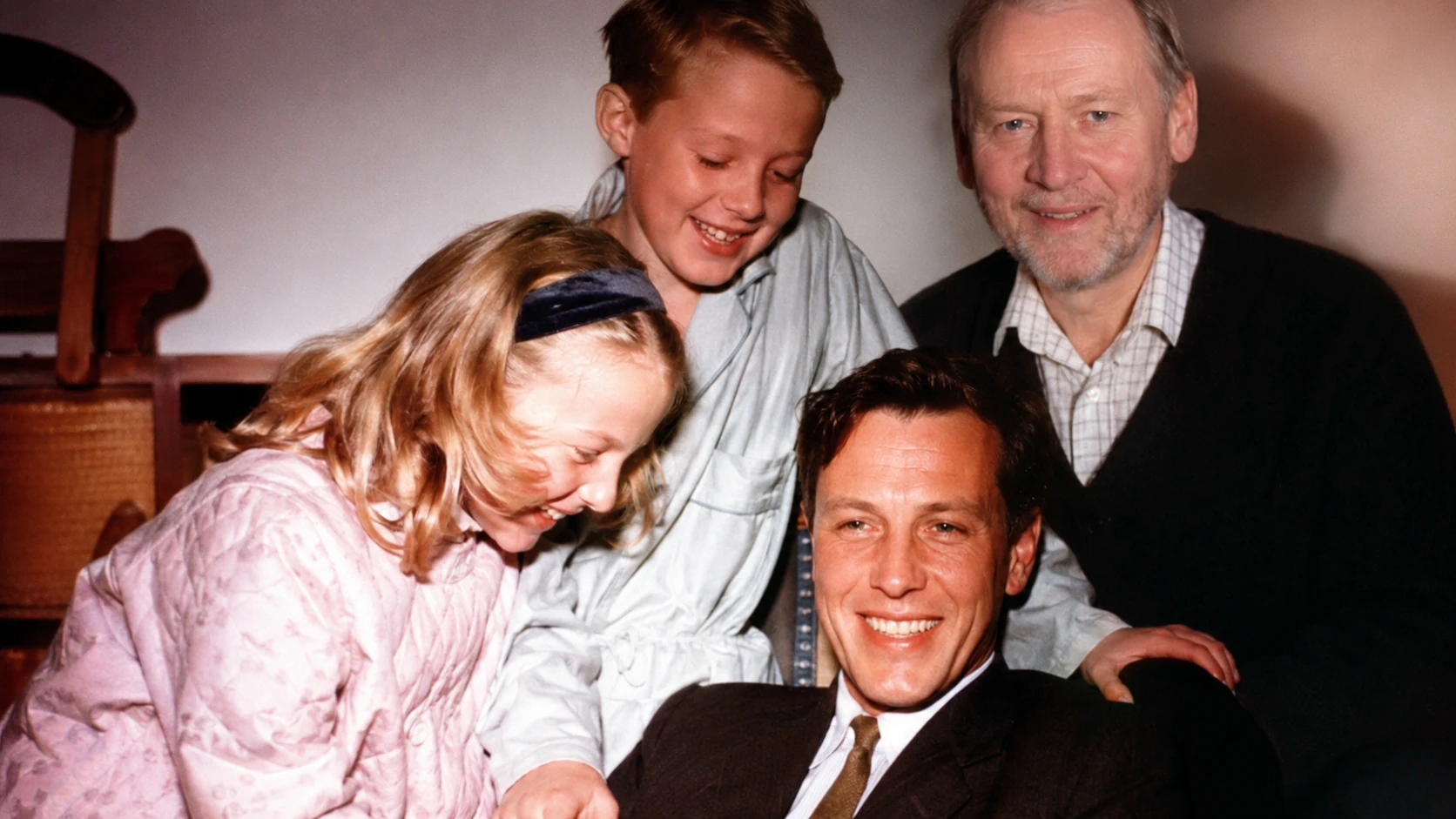
Robert Attenborough carries one of the most familiar surnames in British public life, but he has never lived as a public entertainer. To many readers, his name first appears as a question attached to Sir David Attenborough: Who is David Attenborough’s son, and what does he do? The answer is more interesting than a celebrity footnote. Robert Attenborough is an academic biological anthropologist whose public work has centered on human biology, health, demography, genetics, and New Guinea.
That makes him an unusual figure in the Attenborough story. His father became one of the world’s best-known broadcasters, a trusted voice on nature, evolution, and the fragility of life on Earth. His uncle Richard Attenborough became an acclaimed actor, director, and producer. Robert, by contrast, built a quieter career in research, teaching, and scholarly publication, where reputation is measured less by fame than by careful work.
The public record around him is narrower than many searchers expect. There are no reliable signs that he has tried to cultivate celebrity, sell a public persona, or trade heavily on his family name. What can be verified points to a scholar with long links to the Australian National University and the University of Cambridge. What cannot be verified, especially around money and private family life, should be treated with care rather than filled in with internet guesswork.
Early Life and Family Background
Robert Attenborough was born into a family already closely tied to education, culture, public service, and the arts. His father, Sir David Attenborough, was born in London in 1926 and became one of Britain’s defining broadcasters. His mother, Jane Elizabeth Ebsworth Oriel, married David Attenborough in 1950. The couple had two children, Robert and Susan, and remained married until Jane’s death in 1997.
The wider Attenborough family was unusually accomplished. David’s elder brother, Richard Attenborough, became a celebrated actor and filmmaker, later known internationally for films including Gandhi and for acting roles that reached audiences across generations. Their brother John Attenborough worked in business, staying far less visible than David and Richard. Robert grew up close to a family name associated with cinema, television, education, and public authority.
That background could easily have pushed him toward the public stage. Instead, Robert’s life moved toward scholarship, a path less visible but closely linked to the intellectual world that shaped the Attenborough household. David Attenborough’s own career was rooted in natural history, scientific curiosity, and communication with a broad public. Robert’s interests developed in a related but different direction: the study of human beings as biological, social, and historical populations.
There is limited reliable public information about Robert’s childhood, schools, or exact early ambitions. That absence matters because many online biographies stretch beyond what the record can support. The responsible picture is more modest. He was raised in a family where science, culture, and education mattered, and he later built a career in biological anthropology rather than entertainment or broadcasting.
Education and Academic Direction
Robert Attenborough’s public career is anchored in anthropology, especially biological anthropology. This field studies human beings through evolution, biology, variation, adaptation, health, and population history. It asks how people live in particular environments, how bodies respond to stress and disease, and how human groups change over time. It also draws on genetics, demography, ecology, archaeology, and medical research.
His research interests have been listed by academic institutions as human population biology and health, with special attention to New Guinea. That focus places him in a demanding area of research, because New Guinea is one of the most culturally, linguistically, and biologically diverse regions in the world. Scholars working there must think across many scales at once, from local communities and disease patterns to migration histories and genetic evidence. It is not work that lends itself to quick slogans.
The available record links Robert Attenborough with the Australian National University and the University of Cambridge. At ANU, he has been publicly identified as an honorary senior lecturer connected with archaeology and anthropology. At Cambridge, he has been listed as a senior fellow at the McDonald Institute for Archaeological Research. Those affiliations place him inside respected academic networks rather than the celebrity circuit that surrounds his surname.
His path also reflects a wider tradition within British and Commonwealth scholarship. Biological anthropology has long involved field research, museum collections, medical studies, and debates about human origins. In recent decades, the field has had to confront its own past, including older research practices shaped by colonial power and outdated racial theories. Robert Attenborough’s work belongs to the modern version of the discipline, where health, environment, genetics, history, and ethics all sit in the same frame.
Building a Career in Biological Anthropology
Robert Attenborough’s scholarly profile is not built around one famous media moment. It is built around research themes that return again and again: human population biology, health, nutrition, demography, genetics, and the Pacific. Those subjects can look technical from the outside, but they deal with basic human questions. How do communities survive? How do disease, food, environment, and migration shape bodies and populations? How can biological evidence be read without flattening human history?
His work has often centered on New Guinea, especially Papua New Guinea. That region has attracted anthropologists, linguists, geneticists, archaeologists, and public health researchers because of its extraordinary diversity. It contains hundreds of languages, varied ecological zones, and communities with distinct histories of movement, isolation, exchange, and adaptation. For a biological anthropologist, it offers no simple model and no single story.
One major public marker of his career is the edited volume Human Biology in Papua New Guinea: The Small Cosmos, associated with Robert D. Attenborough and Michael P. Alpers. The book brought together research on geography, demography, social anthropology, linguistics, genetics, growth, nutrition, disease, and medical anthropology. That range shows the kind of scholarship Robert helped organize. It was not about treating people as abstract data, but about connecting human biology to real places and real histories.
This approach also explains why his career is easy to understate in a celebrity-driven biography. Academic careers often develop through articles, chapters, edited books, field collaborations, teaching, and institutional service. They rarely produce a single public turning point recognizable to casual readers. Robert Attenborough’s significance lies in sustained contribution rather than spectacle.
New Guinea and the Questions That Shaped His Work
New Guinea became central to Robert Attenborough’s public research identity because it brings together many of biological anthropology’s hardest questions. The island’s human history reaches deep into the past, and its communities have lived across mountains, coasts, river systems, islands, and forests. Those environments shaped food systems, disease exposure, settlement patterns, and social organization. They also shaped the evidence available to researchers trying to understand population history.
Health and nutrition have been especially important in this work. In places where geography, subsistence, infection, and access to care vary greatly, patterns of growth and disease can reveal how people respond to their environments. Researchers have studied malaria, respiratory illness, iodine deficiency, diabetes, cardiovascular disease, and other health issues in Papua New Guinea. Robert Attenborough’s public research interests fit within that wider effort to connect biological evidence with social and environmental context.
Genetics has added another layer to this field. Studies of New Guinea populations have examined ancestry, migration, isolation, regional differentiation, and links between biological and linguistic diversity. Robert Attenborough has been associated with research that used genetic evidence to explore the peopling of New Guinea and related population histories. The careful point is that genetics can illuminate parts of the past, but it cannot replace archaeology, language history, oral tradition, or social anthropology.
That caution is central to understanding his work. The best population research does not claim that DNA alone tells a complete story. It asks how different kinds of evidence fit together and where they fail to match. In a region as diverse as New Guinea, those mismatches are not problems to hide; they are often the most revealing part of the research.
Family Name and Private Life
Robert Attenborough’s public identity is shaped by his father’s fame, but it is not defined by the same kind of public life. Sir David Attenborough became a household name through decades of broadcasting, from early work at the BBC to major natural history series watched across the world. His voice and presence have become closely linked with public understanding of wildlife, evolution, climate, and conservation. Robert has lived much more privately, appearing mainly through academic records and publications.
His mother, Jane Elizabeth Ebsworth Oriel, is an important part of that family story. David Attenborough has spoken publicly over the years about the personal loss of her death in 1997. The marriage lasted 47 years, and Jane remained far less public than her husband. Robert and his sister Susan grew up within that family structure, though neither has pursued the same level of public attention as their father.
Search interest in Robert often comes from readers trying to understand David Attenborough’s family. That curiosity is understandable, especially because David has become such a trusted public figure. But Robert is not a public celebrity in the usual sense. His spouse, children, day-to-day life, and personal finances are not widely confirmed through reliable public sources.
That privacy should be respected. A famous parent does not make a private adult child an open file for speculation. In Robert’s case, the verified facts are already meaningful: he is David Attenborough’s son, part of a prominent British family, and a scholar with a defined academic career. Anything beyond that needs evidence, not repetition from weak websites.
Relationship With Sir David Attenborough’s Public Legacy
Robert Attenborough’s career has a quiet connection to his father’s public work, even though the two men chose different arenas. David Attenborough became known for explaining the natural world to general audiences. Robert has studied human beings through biology, health, ecology, and population history. Both paths reflect curiosity about life, adaptation, and the relationship between organisms and environments.
The difference lies in audience and method. David’s career required the camera, the script, the journey, and the ability to turn science into television without losing its seriousness. Robert’s work has belonged to academic publishing, field research, data analysis, and specialist debate. One career made science visible to millions; the other contributed to the knowledge base that specialists use to understand human variation and history.
It would be too easy to describe Robert only as “David Attenborough’s son.” That label is true but incomplete. It explains why readers search for him, but not why his own work matters. The more accurate picture is of a scholar from a famous family who chose a less public version of intellectual life.
There is also a personal dignity in that separation. Many children of famous people spend their lives either escaping the comparison or using it as a platform. Robert Attenborough appears to have done neither in any loud way. The available record suggests a professional life built inside universities, not through public branding.
Publications and Scholarly Contributions
Robert Attenborough’s work appears in academic publications tied to human biology, anthropology, and genetics. His name is associated with research on New Guinea populations, human leukocyte antigen evidence, demography, health, and broader questions of population history. These are technical areas, but they sit close to public concerns about ancestry, identity, disease, and human adaptation. They also demand a careful balance between biological evidence and respect for living communities.
The edited work Human Biology in Papua New Guinea: The Small Cosmos remains one of the clearer ways to see his scholarly range. The volume’s subject matter crosses from geography and demography to genetics, nutrition, infectious disease, chronic disease, and medical anthropology. That structure reflects the idea that human biology cannot be understood from one discipline alone. It also shows why Robert’s career is better read through collaboration than individual celebrity.
He has also been connected with research on genetic evidence and population history in New Guinea. Such work has examined how groups may share ancestry, how isolation can shape genetic patterns, and how coastal and inland histories may differ. These studies are not simple origin stories. They are cautious reconstructions built from partial evidence.
In 2023, Robert David Attenborough was listed among the authors of a major scientific paper on genomic analyses of hair attributed to Ludwig van Beethoven. The study drew attention because it brought modern DNA methods to one of music history’s most famous figures. It examined questions around Beethoven’s health, liver disease risk, hepatitis B infection, and paternal ancestry. Robert’s involvement linked him to a modern research project at the meeting point of genetics, archaeology, biography, and medical history.
Public Image and Media Attention
Robert Attenborough’s public image is unusual because it is mostly indirect. He is searched because of his surname, but he is described in reliable sources because of his scholarship. That creates a gap between public curiosity and public information. Many readers arrive looking for a celebrity-family profile and instead find an academic whose work sits far from entertainment news.
The lack of heavy media attention should not be mistaken for obscurity within his field. Academic visibility works differently from media visibility. A person may be widely known in specialist circles through books, articles, teaching, institutional work, and conference networks without becoming familiar to the general public. Robert’s known record fits that pattern.
There are no well-supported public controversies attached to him in the major sources that identify his work. There is also no reliable public basis for dramatic claims about personal wealth, family conflict, or hidden public ambitions. That kind of restraint can feel unsatisfying in a media environment trained to expect revelation. But here the truth is quieter and more credible.
What stands out is consistency. Robert Attenborough has remained attached to research areas that require patience, caution, and collaboration. His public identity has stayed aligned with scholarship rather than fame. That is not a lack of story; it is the story.
Money, Income Sources, and Net Worth
There is no credible public net worth figure for Robert Attenborough. Any website claiming a precise amount should be treated with suspicion unless it explains its sourcing, which most do not. Unlike actors, media hosts, executives, or public company figures, academic researchers usually do not have transparent public earnings. Their income may come from university roles, grants, research appointments, consulting, pensions, book royalties, or other professional activity, but those details are not usually public.
What can be said is limited and should remain limited. Robert’s public career suggests an academic income base rather than an entertainment fortune. University affiliations, research publication, and scholarly editing are not the same as commercial celebrity earnings. It would be inaccurate to infer wealth from the Attenborough name alone.
His father’s fame also should not be used as a proxy for Robert’s finances. Family connection does not confirm inheritance, asset ownership, personal investments, or income. Serious biography separates a person’s own public record from assumptions attached to relatives. In Robert’s case, no reliable figure supports a published estimate of net worth.
That said, his career has clear non-monetary value. Academic influence often appears through contribution to knowledge, students, collaborations, and long-term research records. Those forms of standing do not translate neatly into celebrity-style financial rankings. For Robert Attenborough, that may be exactly the point.
Current Status and Where Robert Attenborough Is Now
Robert Attenborough’s current public status is that of a senior scholar linked with academic institutions, especially Cambridge and ANU. His listed roles and research interests place him within biological anthropology, archaeology, human population biology, and Pacific studies. He is not a regular media figure and does not appear to maintain a broad public-facing celebrity profile. The most reliable way to follow his work is through university pages and academic publications.
His more recent public research connection to the Beethoven DNA study shows that his work has not been confined only to New Guinea. That project placed him among researchers applying genomic methods to historical questions. It also showed how the tools of biological anthropology now reach into biography, medical history, and cultural heritage. Even in that high-interest case, the tone of the work remained scientific rather than sensational.
For readers searching today, the most accurate answer is that Robert Attenborough remains known chiefly as a scholar and as the son of Sir David Attenborough. He has not turned that family connection into a heavily public identity. His life appears to have been shaped by research, institutions, and intellectual work more than media attention. That distinction makes him different from the Attenboroughs most viewers know, but not less worthy of notice.
Frequently Asked Questions
Who is Robert Attenborough?
Robert Attenborough is a British academic biological anthropologist and the son of Sir David Attenborough and Jane Elizabeth Ebsworth Oriel. He is publicly known for scholarly work connected with human population biology, health, demography, genetics, and New Guinea. His academic affiliations have included the Australian National University and the University of Cambridge.
He should not be confused with Richard Attenborough, who was David Attenborough’s brother and a major figure in film. Robert’s life has been much more private and academic. His public record is strongest in university profiles, research publications, and edited scholarly work.
Is Robert Attenborough related to David Attenborough?
Yes, Robert Attenborough is David Attenborough’s son. David Attenborough and Jane Elizabeth Ebsworth Oriel had two children, Robert and Susan. Jane died in 1997 after a long marriage to David.
That family connection is the main reason many people search for Robert’s name. Still, it should not overshadow his own professional identity. He has built a career in anthropology rather than television or film.
What does Robert Attenborough do for a living?
Robert Attenborough is an academic researcher and biological anthropologist. His work has focused on human population biology, health, demography, nutrition, genetics, and New Guinea. He has been connected with respected academic institutions including ANU and Cambridge.
His career is not a celebrity career, so it does not have the kind of public milestones familiar from acting, television, or politics. It is better understood through research themes, publications, and institutional roles. That is why reliable information about him tends to appear in academic sources rather than entertainment media.
Is Robert Attenborough married?
There is no widely confirmed reliable public information about Robert Attenborough’s marital status. Some websites may make claims about private details, but those claims should be treated carefully if they do not cite strong sources. A responsible biography should not invent or repeat personal information without verification.
This is especially true because Robert is not a public entertainer or elected figure. His family connection to David Attenborough does not make every part of his private life public. The confirmed record is strongest around his family background and academic career.
What is Robert Attenborough’s net worth?
There is no credible verified public estimate of Robert Attenborough’s net worth. Precise figures found on low-quality biography websites should not be treated as fact. Academic careers usually do not produce the kind of public financial reporting that allows reliable net worth calculations.
His likely income sources would be professional and academic rather than entertainment-based, but the details are not public. It would be misleading to attach a number to his wealth without evidence. The most accurate answer is that his net worth is not publicly known.
Is Robert Attenborough still active academically?
Public records show Robert Attenborough associated with academic institutions and research interests in biological anthropology. He has also been listed among authors of recent scientific work, including the 2023 genomic study involving hair attributed to Beethoven. That suggests continued scholarly connection in recent years.
His activity does not appear to be centered on public media, interviews, or celebrity appearances. Readers interested in his current work should look to university profiles, academic databases, and published research. Those sources give a clearer picture than general biography pages.
Why is Robert Attenborough not as famous as David Attenborough?
Robert Attenborough chose a different kind of career. David Attenborough spent decades in broadcasting and became a trusted public voice on natural history. Robert worked in academic anthropology, where influence usually stays within universities, journals, books, and research networks.
The contrast is sharp but not unusual. Many scholars do important work without becoming household names. Robert’s public profile is quiet because his professional world rewards accuracy, patience, and contribution over fame.
Conclusion
Robert Attenborough’s life resists the simple shape of a celebrity biography. He comes from one of Britain’s most recognizable cultural families, yet his own career has unfolded in lecture rooms, research projects, edited volumes, and scientific papers. That makes him a more private figure than many readers expect. It also makes the verified details more important.
The strongest account of him is not built from rumor, money estimates, or family-name speculation. It is built from his place in biological anthropology, his work on human population biology and health, and his links to New Guinea research. His career shows a person interested in how human beings live, adapt, move, and change across environments and generations.
That is a quieter legacy than television fame, but it has its own weight. Robert Attenborough matters because he reminds readers that the Attenborough name is not only a story of cameras, films, and public narration. It is also a story of scholarship, patient inquiry, and the less visible work of understanding human life with care.


